

Actress Sarah Siddons’ Annotated Copy
Actress Sarah Siddons’ Annotated Copy
[SIDDONS, Sarah (1755–1831) – her copy]
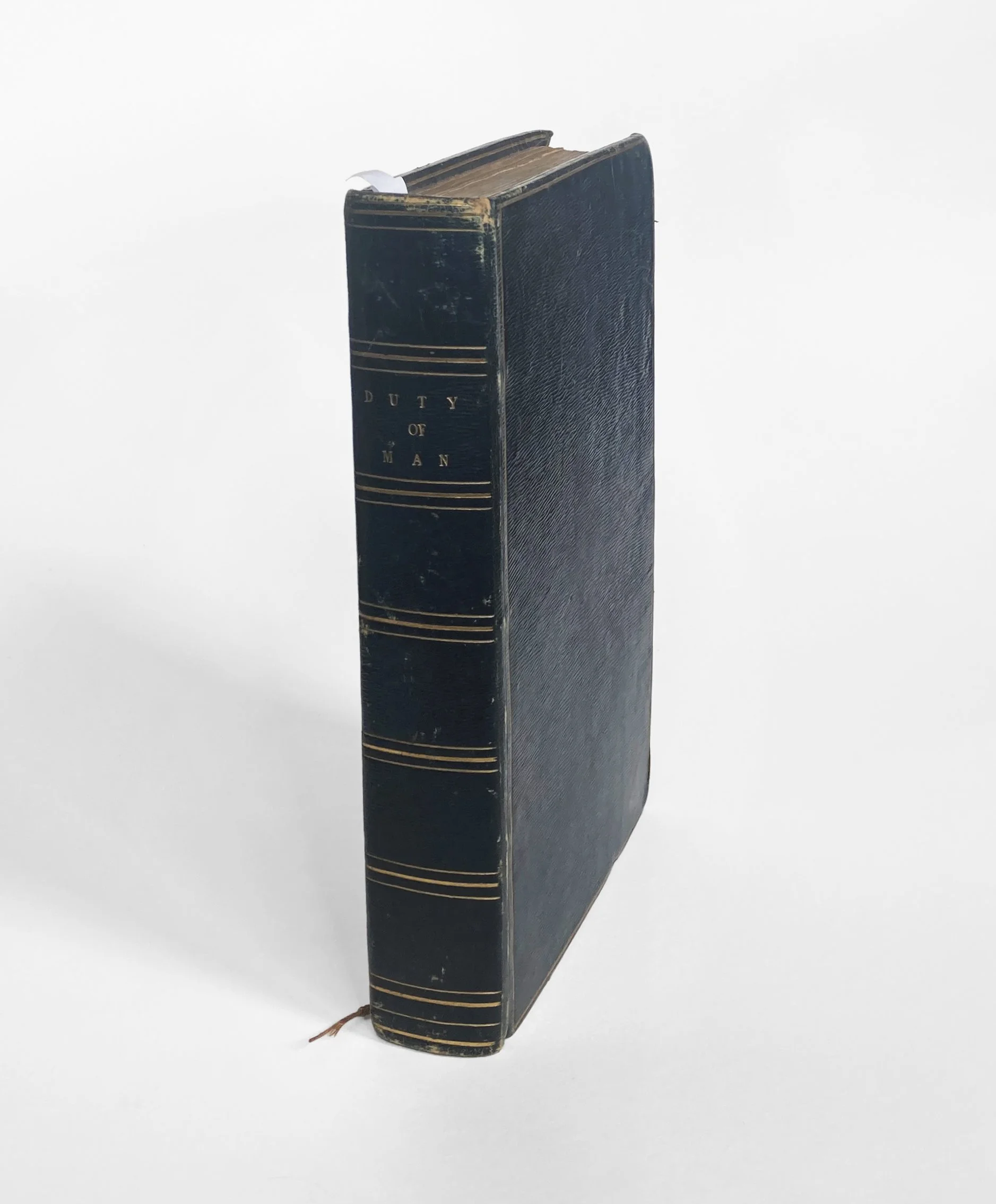
The New Whole Duty of Man […]
Colophon: ‘London: Printed for W. Bent. at the King’s Arms. Paternoster Row. And the other Proprietors.’ [No date, 1798?]
8vo (247 x 156mm), pp. [2], [i]–x, [1]–526, [16, index]
Essay
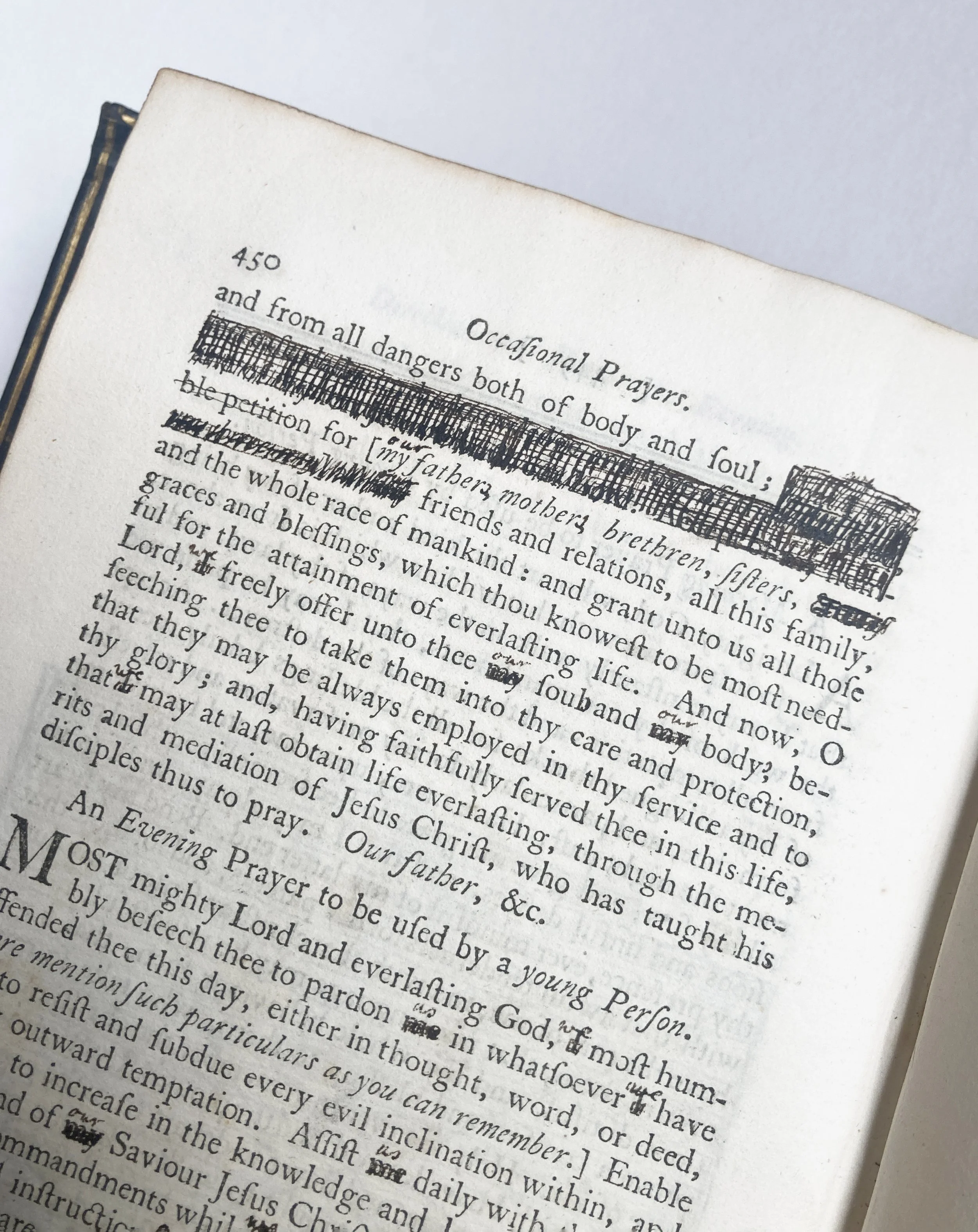
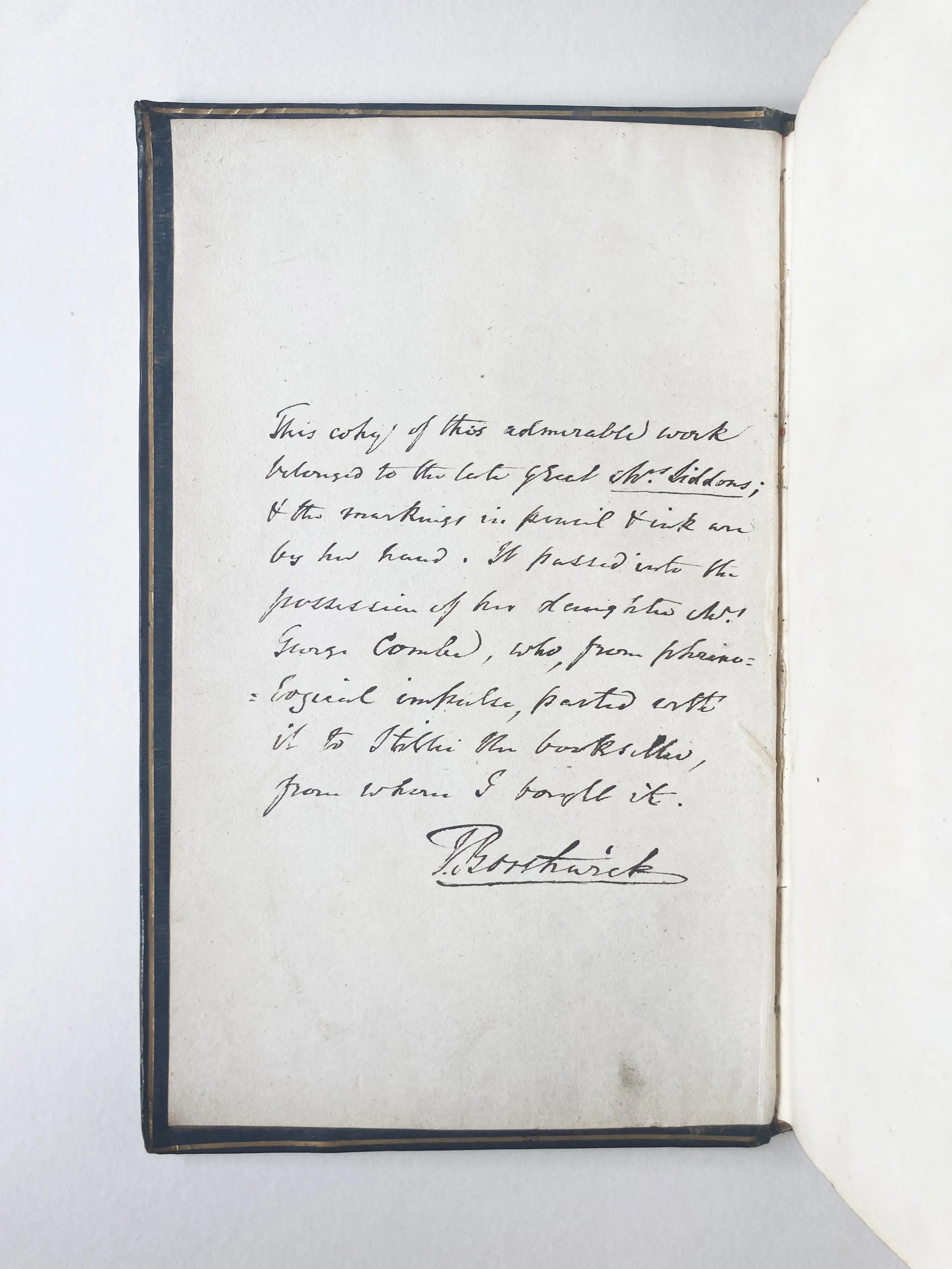
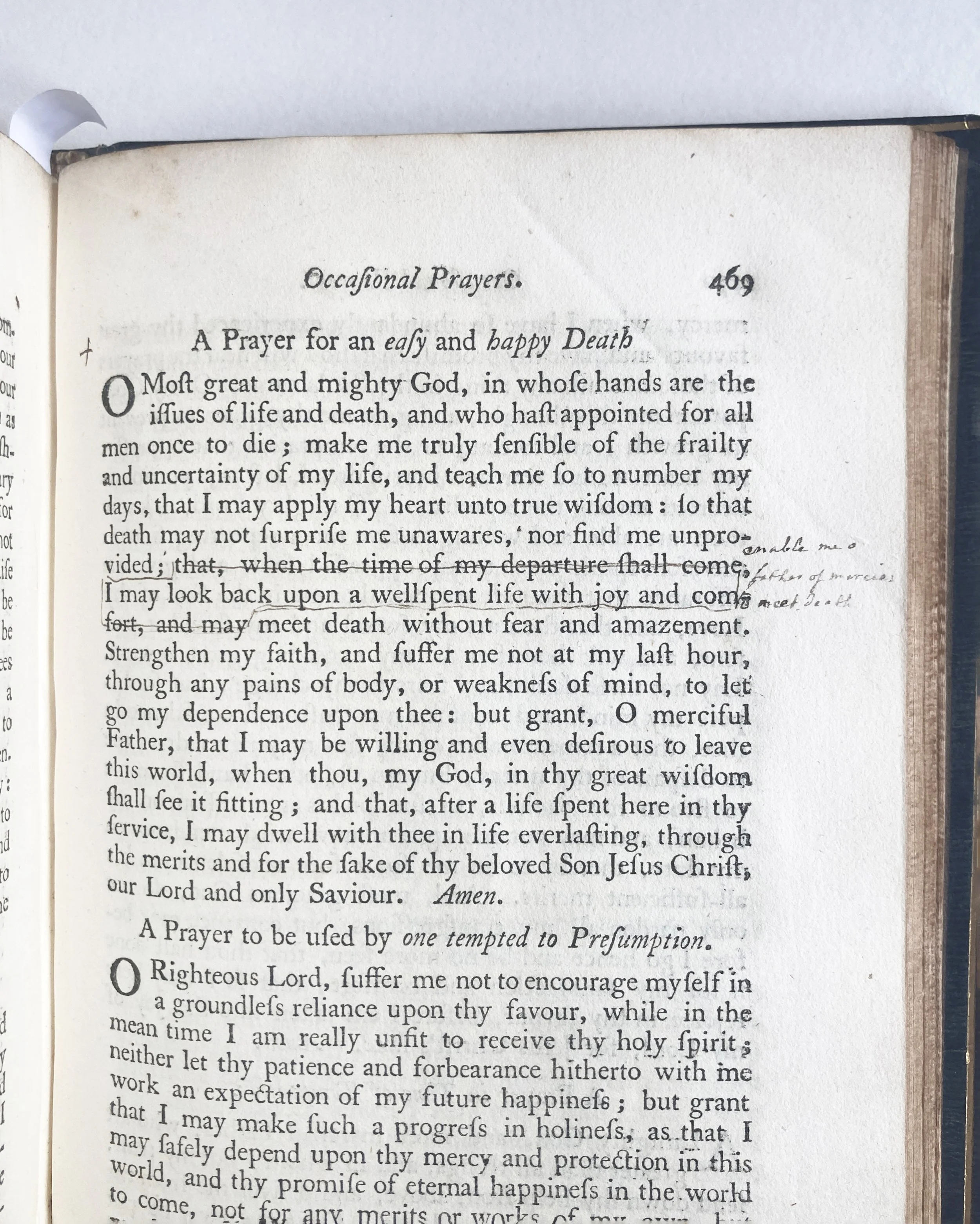
An extensively marked-up copy of this classic devotional text, bearing a long note to the front free endpaper, attributing ownership to the renowned Shakespearean actress Sarah Siddons (1755–1831):
This copy of this admirable work belonged to the late & great Mrs. Siddons; & the markings in pencil & ink are by her hand. It passed into the possession of her daughter Mrs. George Combe who, from phrenological impulse, parted with it to Stillie the bookseller, from whence I bought it.
The note is signed ‘Borthwick’, and the title page is also inscribed ‘Borthwick / Crookston 1838’. This is John Borthwick, 13th Lord Borthwick (1788–1845), and Stillie is James Stillie, book and manuscript dealer of George Street, Edinburgh. George Combe, meanwhile, was the leading phrenologist of his age, and indeed married Ceclia Siddons in 1833.
Sarah Siddons (1755–1831) was the leading actress of her age. In 1816, as her career reached its end, William Hazlitt wrote a of her:
She raised Tragedy to the skies, or brought it down from thence. It was something above nature. We can conceive of nothing grander. She embodied to our imagination the fables of mythology, of the heroic and deified mortals of elder time. She was not less than a goddess, or than a prophetess inspired by the gods. Power was seated on her brow, passion emanated from her breast as from a shrine. She was Tragedy personified. She was the stateliest ornament of the public mind.
This was no overstatement: throughout her career, Siddons had become not only a leading light of the stage, but also one of the first true ‘celebrities’. She was painted by Thomas Lawrence (14 times!), as well as by Reynolds and Gainsborough. In Reynold’s portrait she is, as Hazlitt says, a literal personification of the Muse of Tragedy.
Siddons’ breakthrough role was Lady Macbeth, about whom she wrote following the success of her portrayal. She played almost every major female role in Shakespeare, but also starred as Hamlet on many occassions, to great success.
The marginal marks and alterations in the present volume are extensive, and indicate a very close reading of the text, perhaps over a prolonged period of time. Siddons was the daughter of a Catholic father and a Protestant mother, and with her sisters (though not her brothers) she was brought up as an Anglican. Later in life she turned more deeply to religion, as her early biographer Nina A. Kennard notes:
Above all, she had the support and consolation of a pure unswerving religious faith; through her chequered life of triumph and bereavement, joy and sorrow, Sarah Siddons had ever kept that alive in her heart.