

COMPUTER MEMORY: R&D DOCUMENTS FROM E.R.A., CIRCA 1948
COMPUTER MEMORY: R&D DOCUMENTS FROM E.R.A., CIRCA 1948
[ENGINEERING RESEARCH ASSOCIATES]
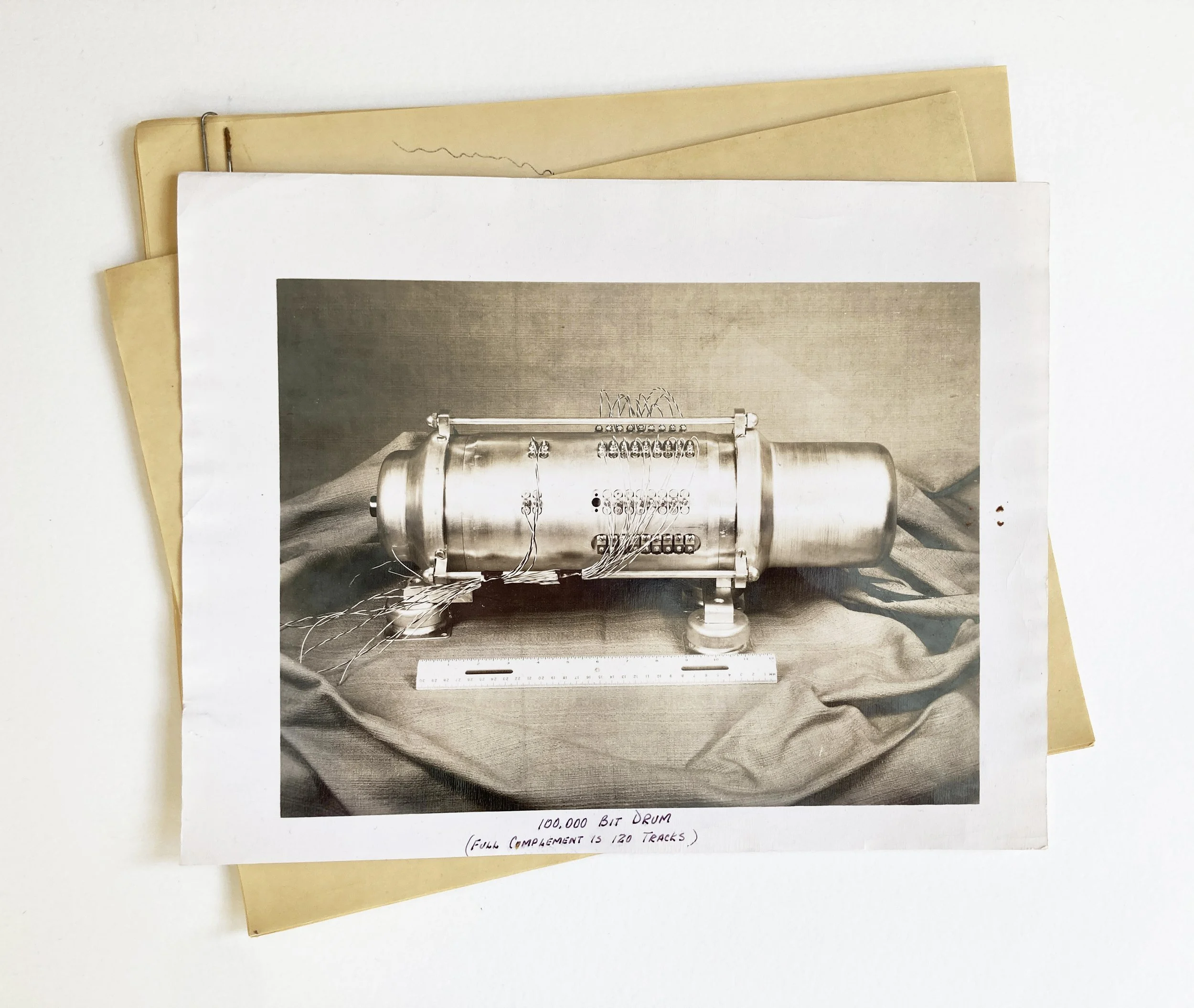
Photograph and engineering documents for an experimental Magnetic Drum Memory system
Engineering Research Associates, St Paul MN, circa 1948
Gelatin silver print, on glossy paper stock, 217 x 278mm [together with:] 8 sheets of engineering drawings, reproduced from manuscript originals, 216 x 279mm
Very good condition: photograph creased around the edges but the image in excellent condition; drawings near fine: age toned and brittle, with rust marks and creases from a paper'clip
Essay
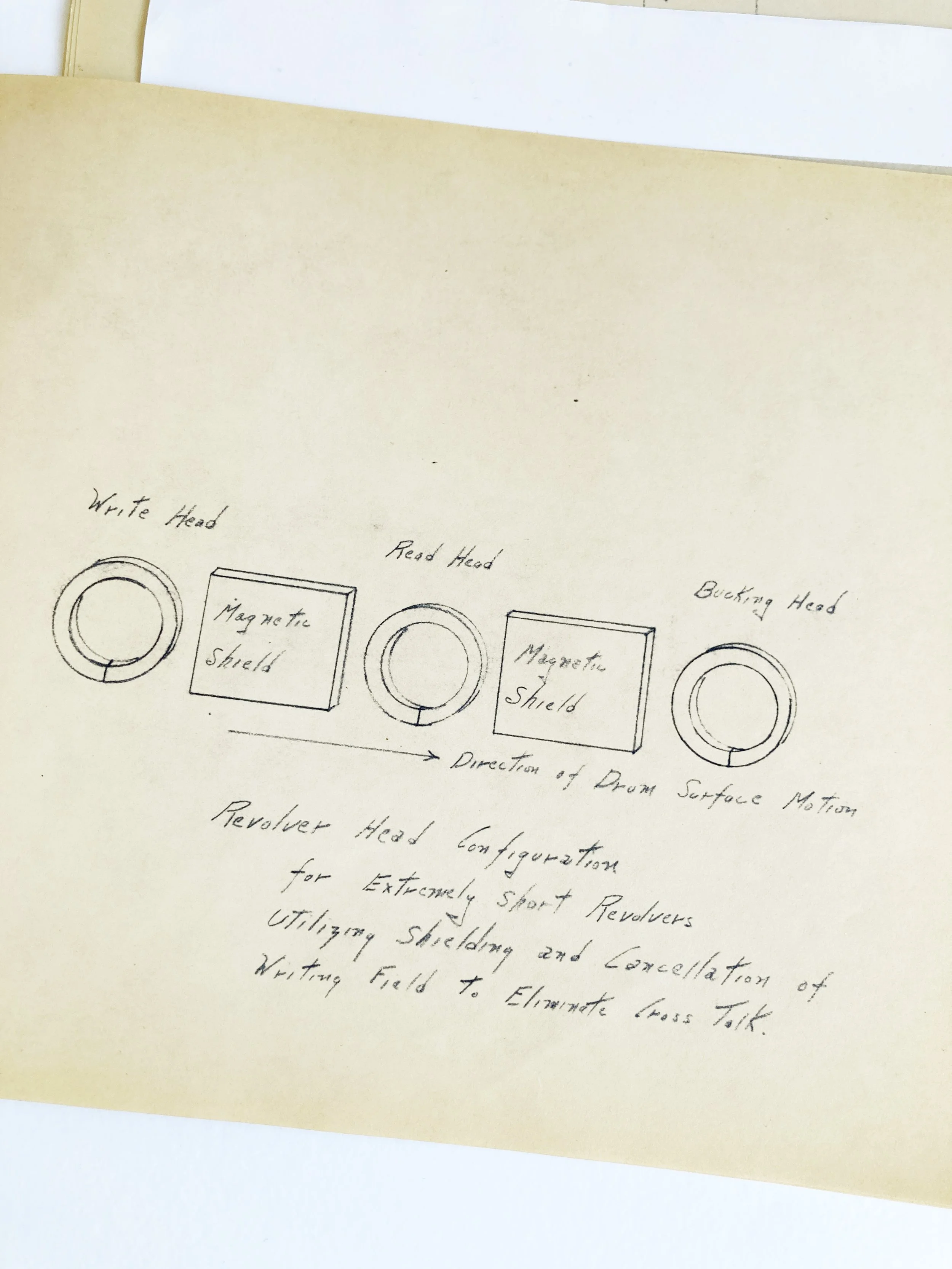
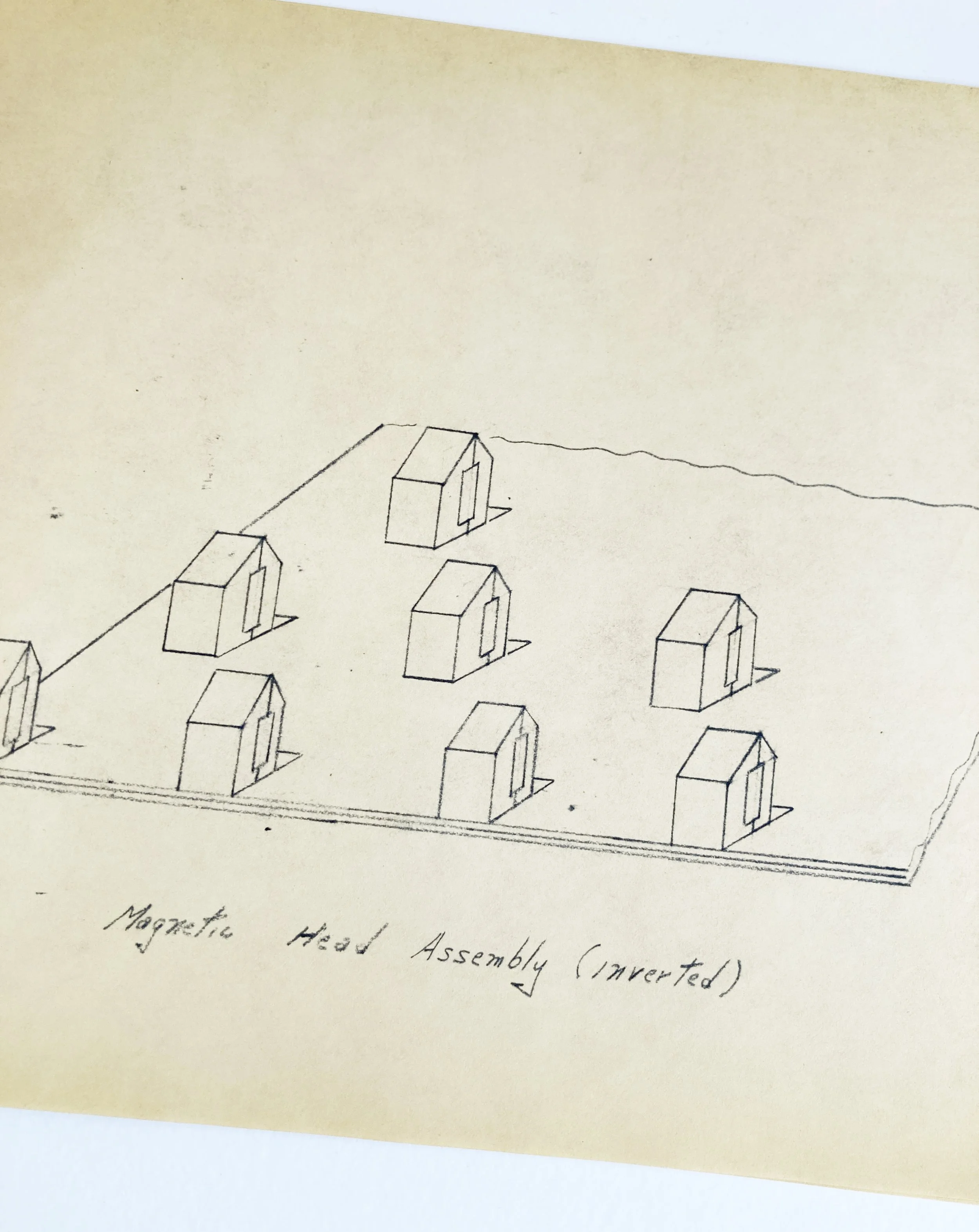
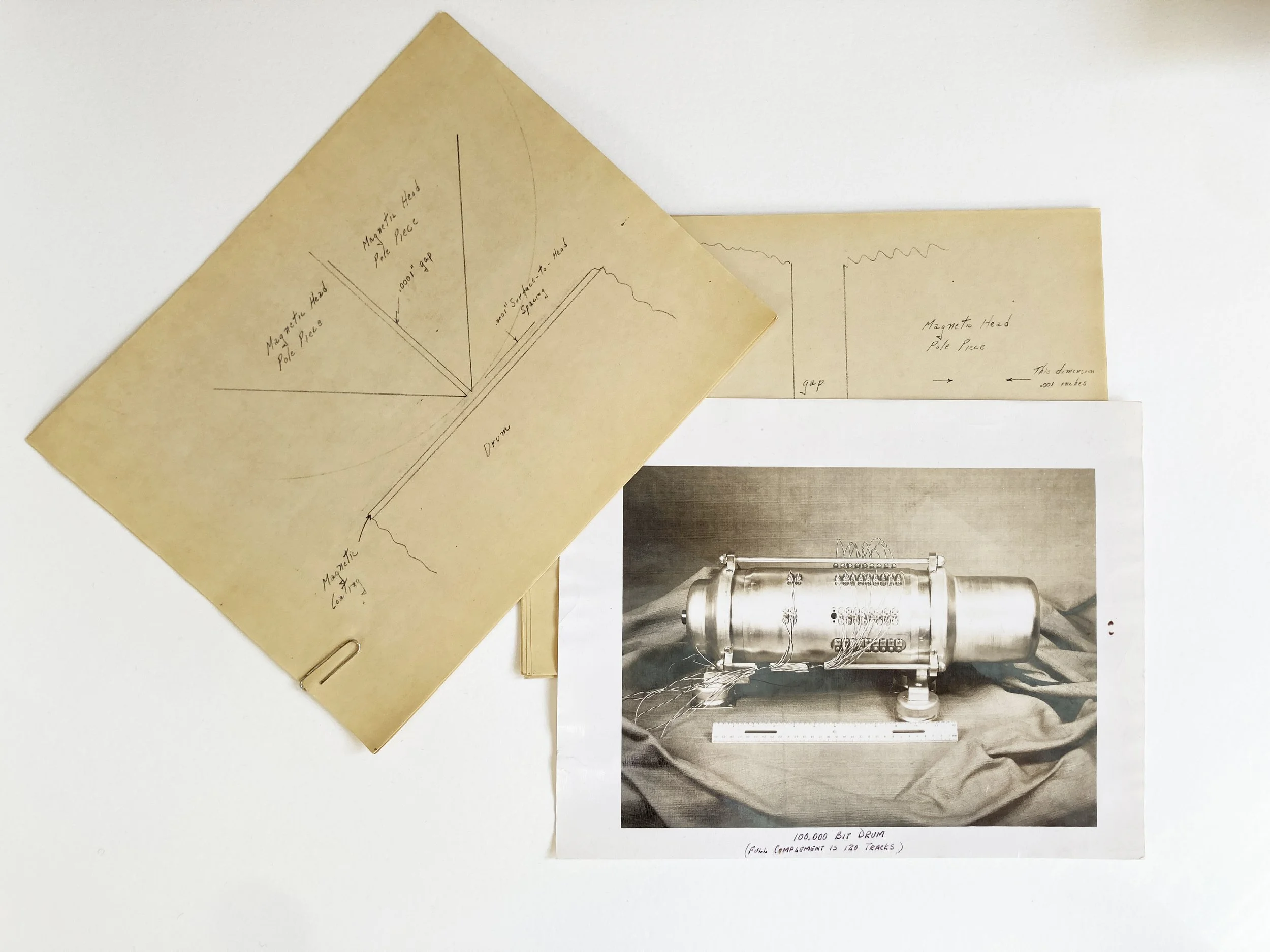
An outstanding survival: a group of original mimeographed engineering drawings, and a presentation photograph of the assembled magnetic drum memory system, dating from the very early years of the development of this crucial component of electronic digital computing.
Magnetic drum memory was one of the first practical forms of electronic computer memory, using a rotating drum coated with a magnetic material to store data and instructions. The original idea dates back to the 1930s, but it was brought into use in electronic digital computing by Engineering Research Associates (ERA) in the period 1946–1950.
ERA had its origins in wwii us Navy during code-breaking. After the War a group of engineers and scientists in the group Communications Supplementary Activity – Washington (CSAW) sought investors for the development of specialist code-breaking machinery, ending up in St Paul, Minnesota, in a disused glider factory. Their specialism was magnetic drum storage, and in 1947 the Navy commissioned a stored-program electronic digital computer, eventually made public as the ERA 1101.
Through 1947–48 ERA issued a number of technical papers on the development of magnetic drum storage; the system was made more widely known with the publication of their classic handbook on digital computers, High-Speed Computing Devices (1950). From the limited information in the caption of the photograph here, we can date the image and engineering drawings to the period between the prototype work of 1947 and the finished commercially available drums of 1950.
Drum memory influenced early computer architecture, including instruction sequencing and memory management. A particularly important case is IBM, where initial contact with era led to the development of the ibm 650, the company's first mass-produced electronic digital computer.
References: Erwin Tomash and Arnold A. Cohen, 'The Birth of an ERA: Engineering Associates, Inc. 1946-1955', Annals of the History of Computing (1979).