

THE UK RECEPTION OF CHARLES OLSON
THE UK RECEPTION OF CHARLES OLSON
OLSON, Charles (1910–1970); [TOMLINSON, Charles (1927–2015) – his copies]
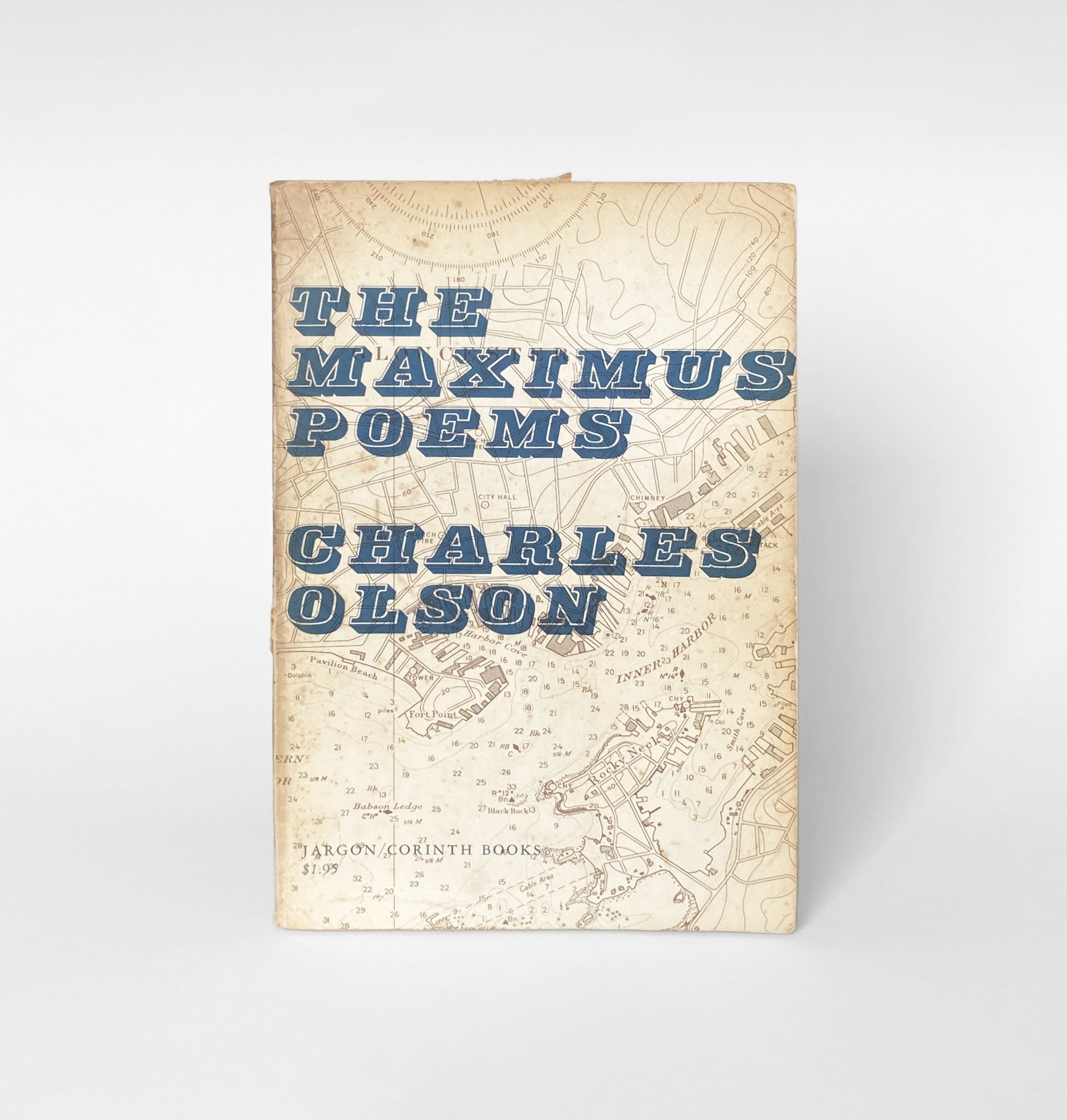
Call Me Ishmael: A Study of Melville [with:] The Maximus Poems
New York: Grove Press, 1947 [first edition] (Ishmael); New York: Corinth Books, 1960 [first edition] (Maximus)
Two paperbacks; 202 x 135; pp. [8], 119 (Ishmael) and 227 x 155mm; pp. [6], 160, [2] (Maximus)
Essay
A highly significant pair of association copies. Poet Charles Tomlinson’s copies of two key works by Charles Olson, one of the most important Postwar American poets and a vital influence on the British avant-garde through the 1960s and 1970s.
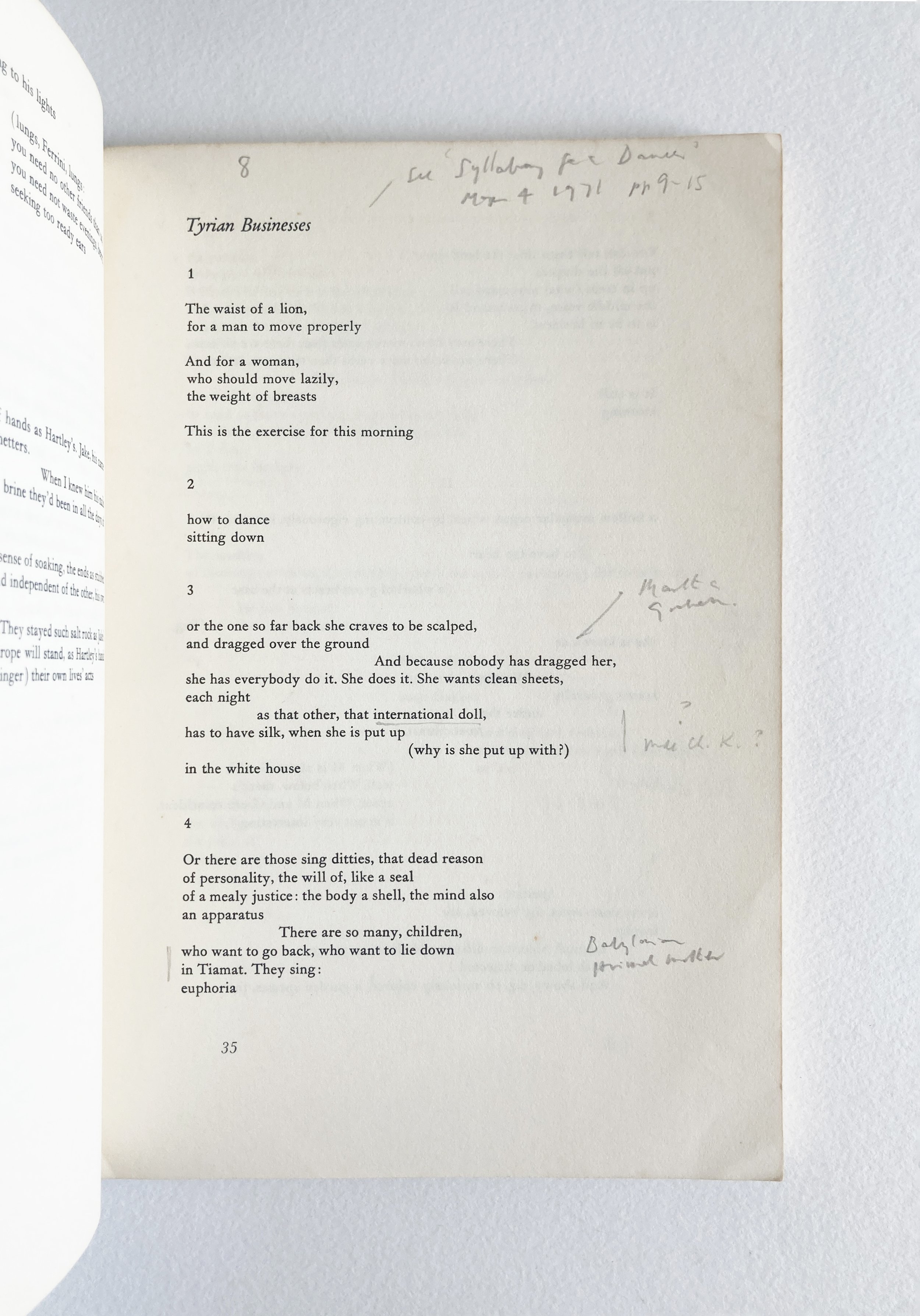
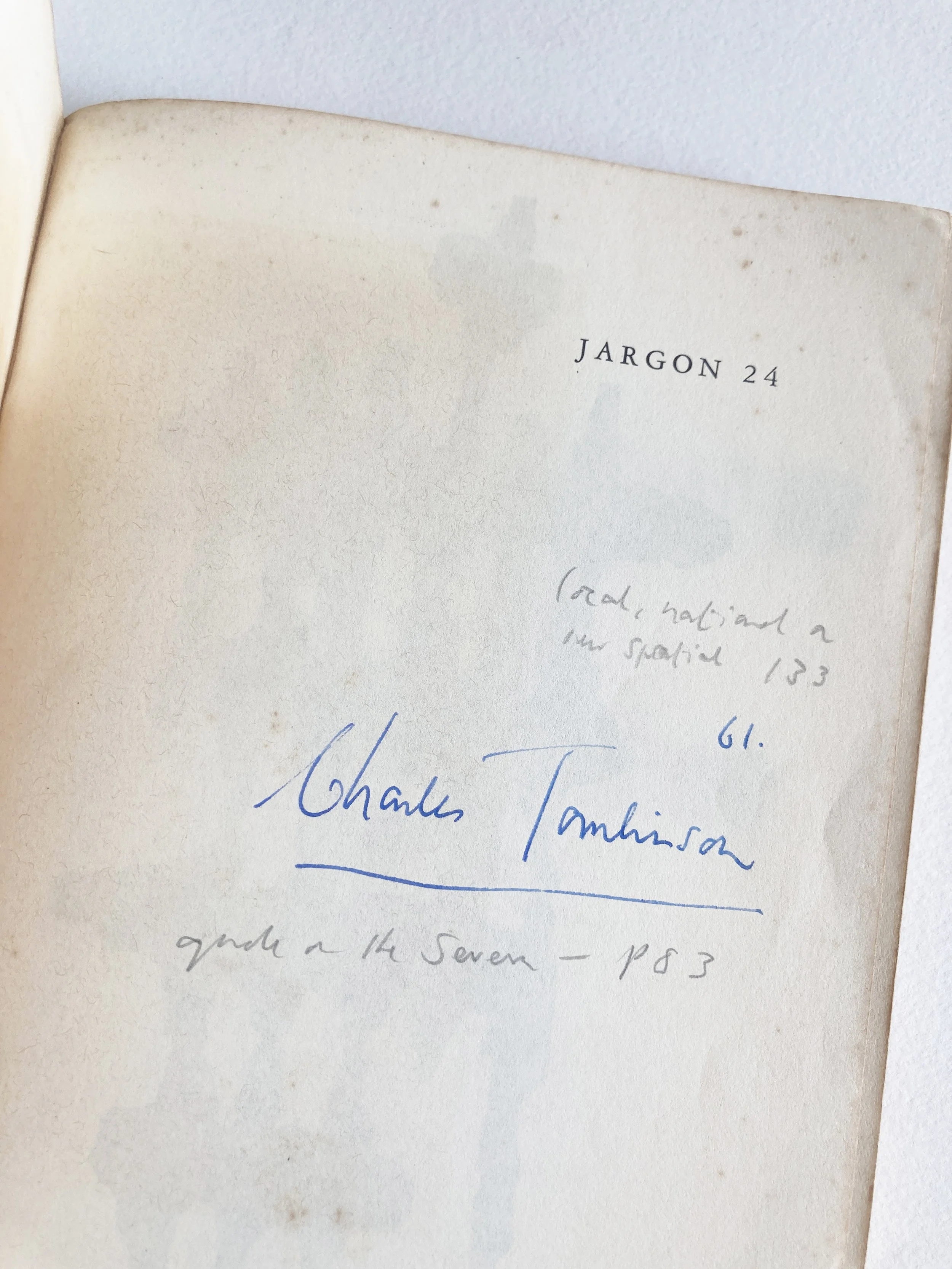
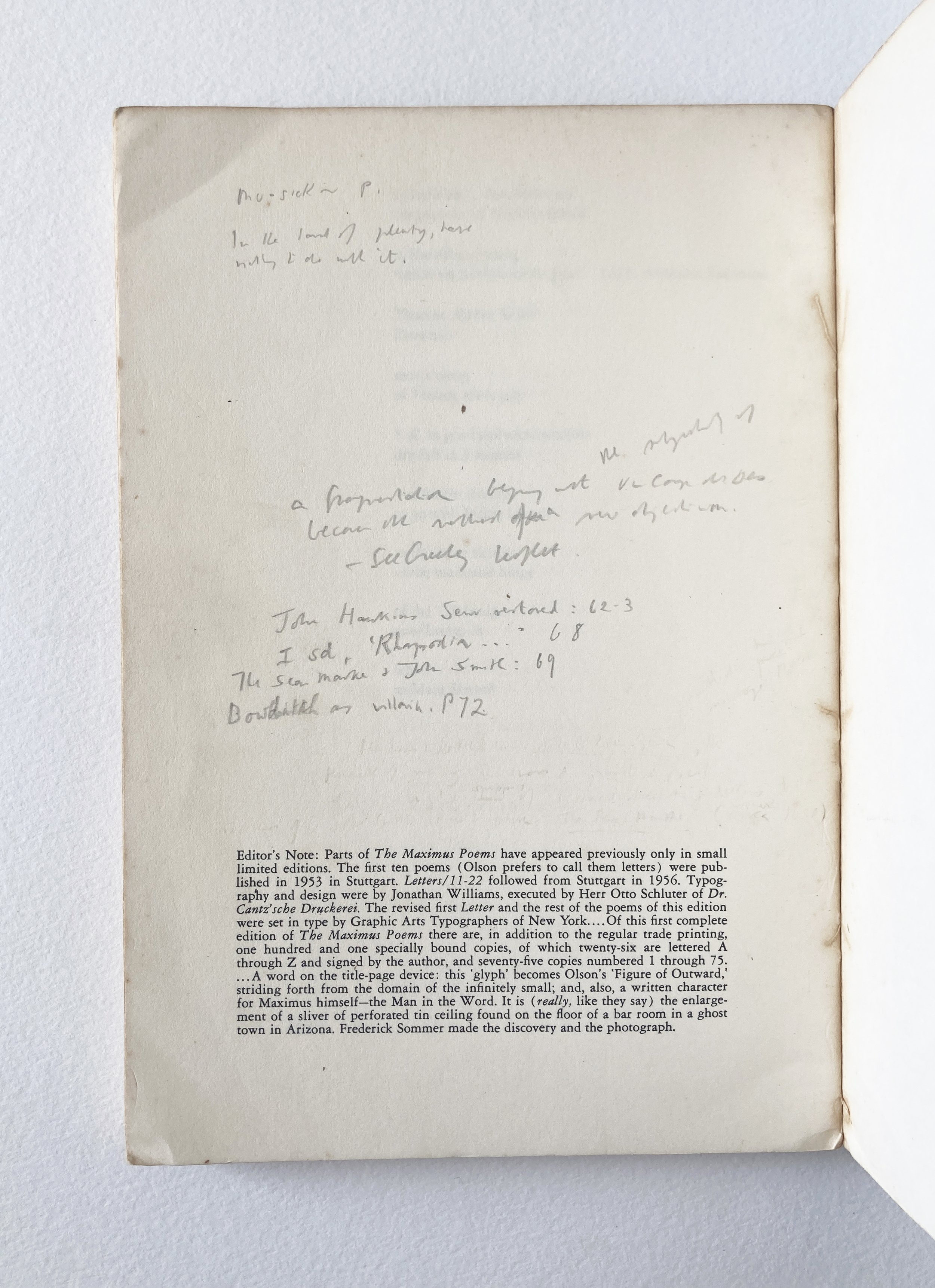
Tomlinson was the author of en essay on Olson titled ‘From both sides of the Atlantic’, published in the New Statesman, 3 March 1961, present here in a clipping laid into The Maximus Poems. In his copy of Maximus Tomlinson has made many notes over a long period – at least a decade. We can see him preparing the New Statesman article, and then finding references at least down to 1971.
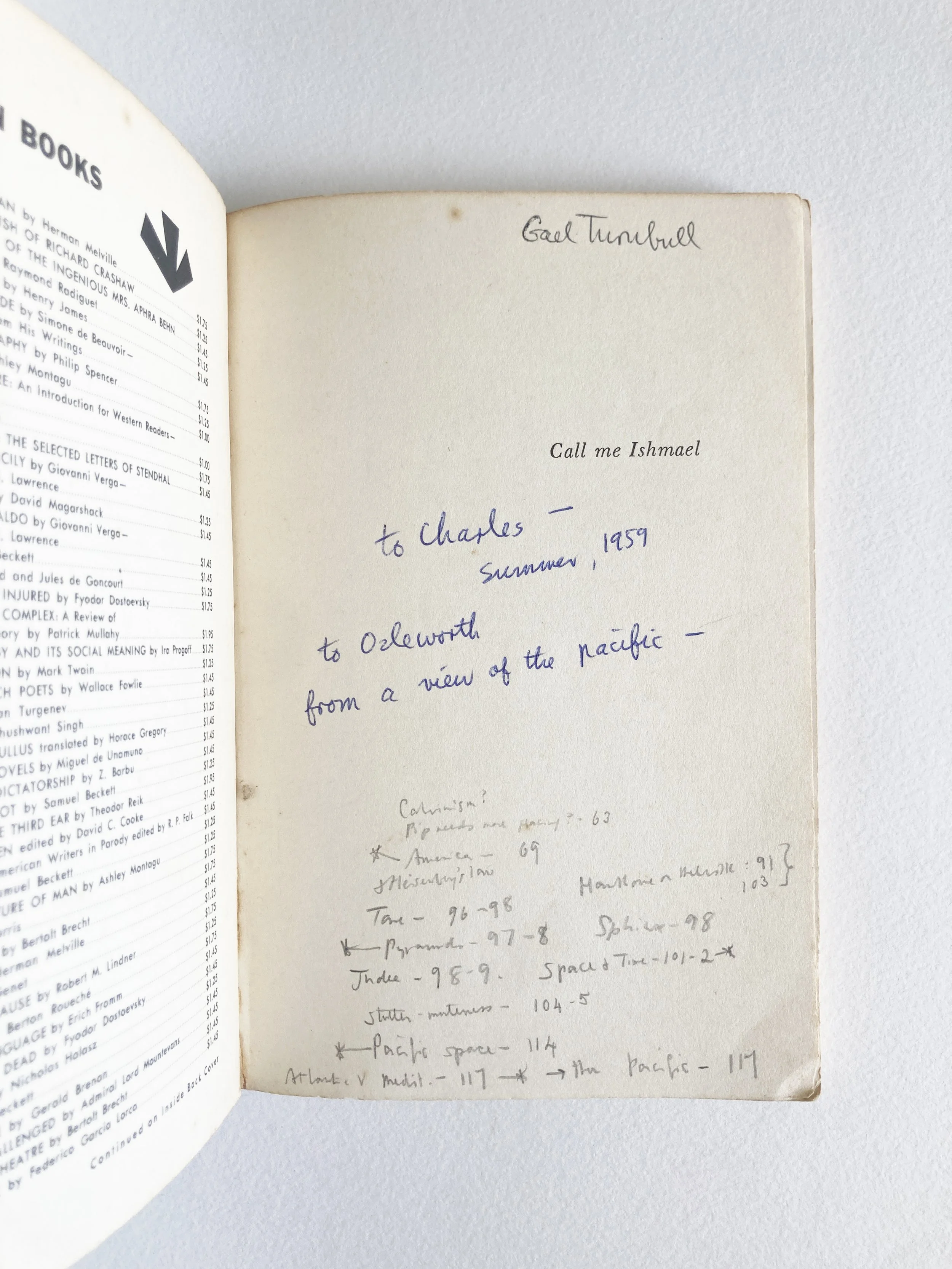
We can also infer, from the inscription to Olson’s Call Me Ishmael, that Tomlinson was introduced to Olson by fellow-poet Gael Turnbull, who was that book’s first owner and inscribed it to Tomlinson in the summer of 1959 (‘from a view of the Pacific’). In the New Statesman review Tomlinson wrote that ‘Call Me Ishmael contains some brilliantly intuitive reflections on the nature of American space; and that other variety of space, the typographical’. The volume is extensively annotated.
Olson was well aware of Tomlinson’s interest in his work, discussing this in a series of letters with the English poet J.H. Prynne:
it was a pleasure to have [Tomlinson] speak up, and though I dig he does think the trouvaille is what it does amount to he cld I believe be persuaded that picking one’s way (among debris, was it?) was, at least, a possibility—then. (Olson to Prynne, 9 November 1961)
Here Olson is commenting on Tomlinson’s critique: ‘Olson is too reckless an improviser always to be aware of the quality of his own scattered and untidy trouvailles.’
But Tomlinson’s appreciation of Olson – surely the first such public statement in the British press – was profound. He selects Letters 12 and 13 for particular praise and quotation, and the margin of Maximus here, at the end of Letter 12, he writes ‘the best of the lot.’
Condition
Both books in fair to good condition: covers worn; spine of Maximus age-darkened; occasional very light spotting; numerous annotations; offsetting from laid-in article to Maximus pp. 72–3
References
Ryan Dobran (ed.), The Collected Letters of Charles Olson and J. H. Prynne, pp. 12–15