

William Burroughs in St Louis, 1964: a large group of original photographs, and associated materials
William Burroughs in St Louis, 1964: a large group of original photographs, and associated materials
BURROUGHS, William S. (1914–1997)
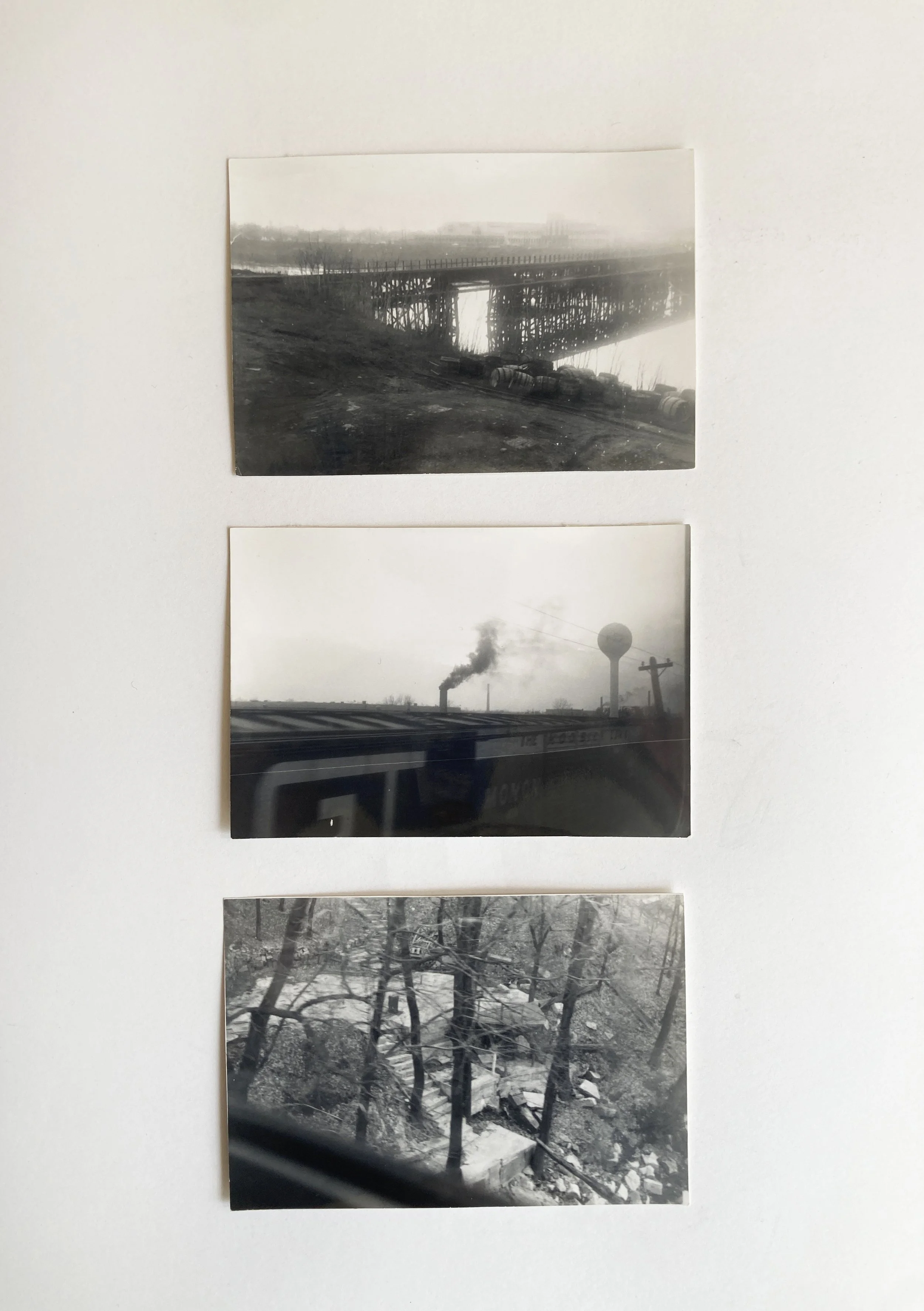
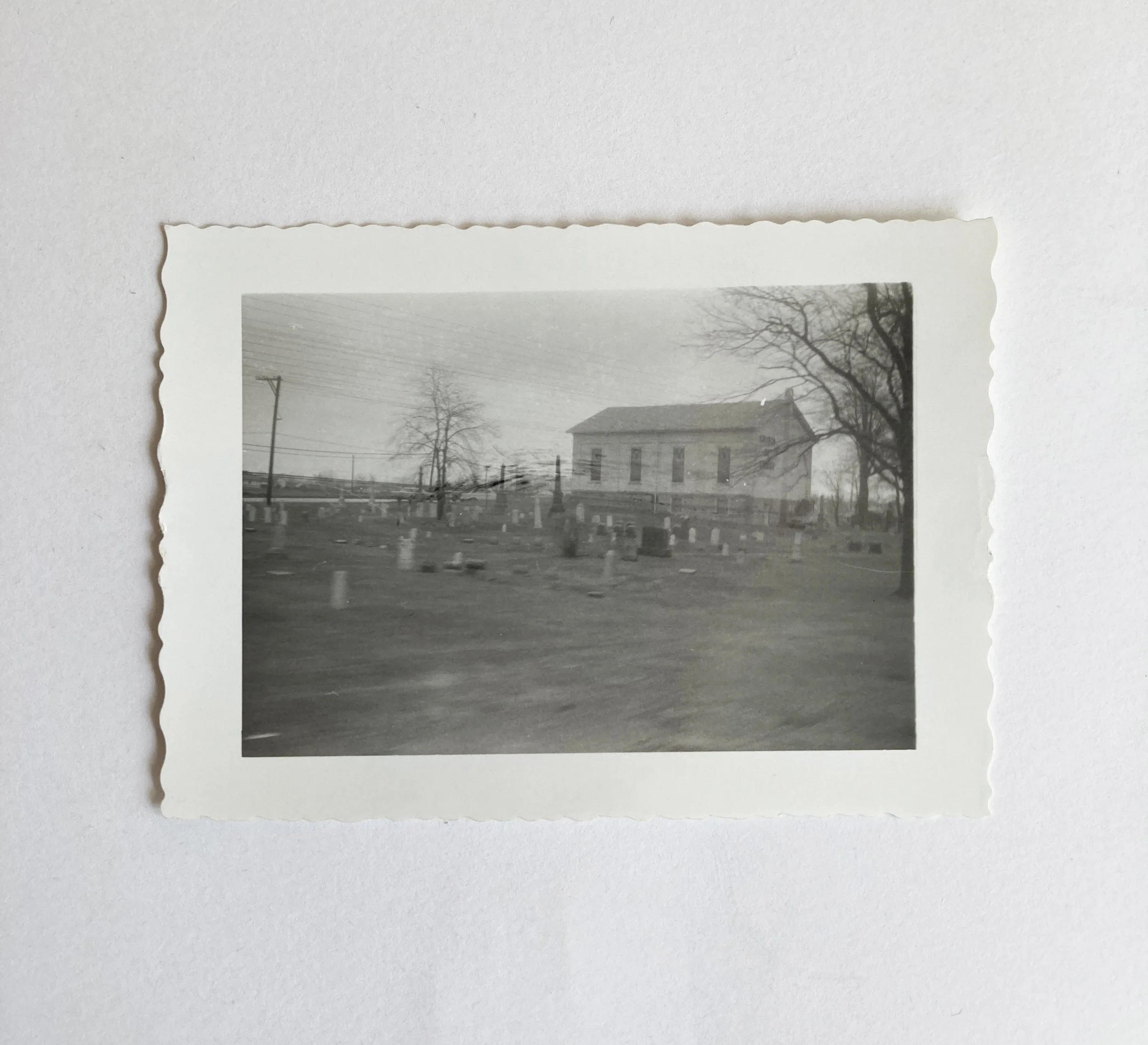
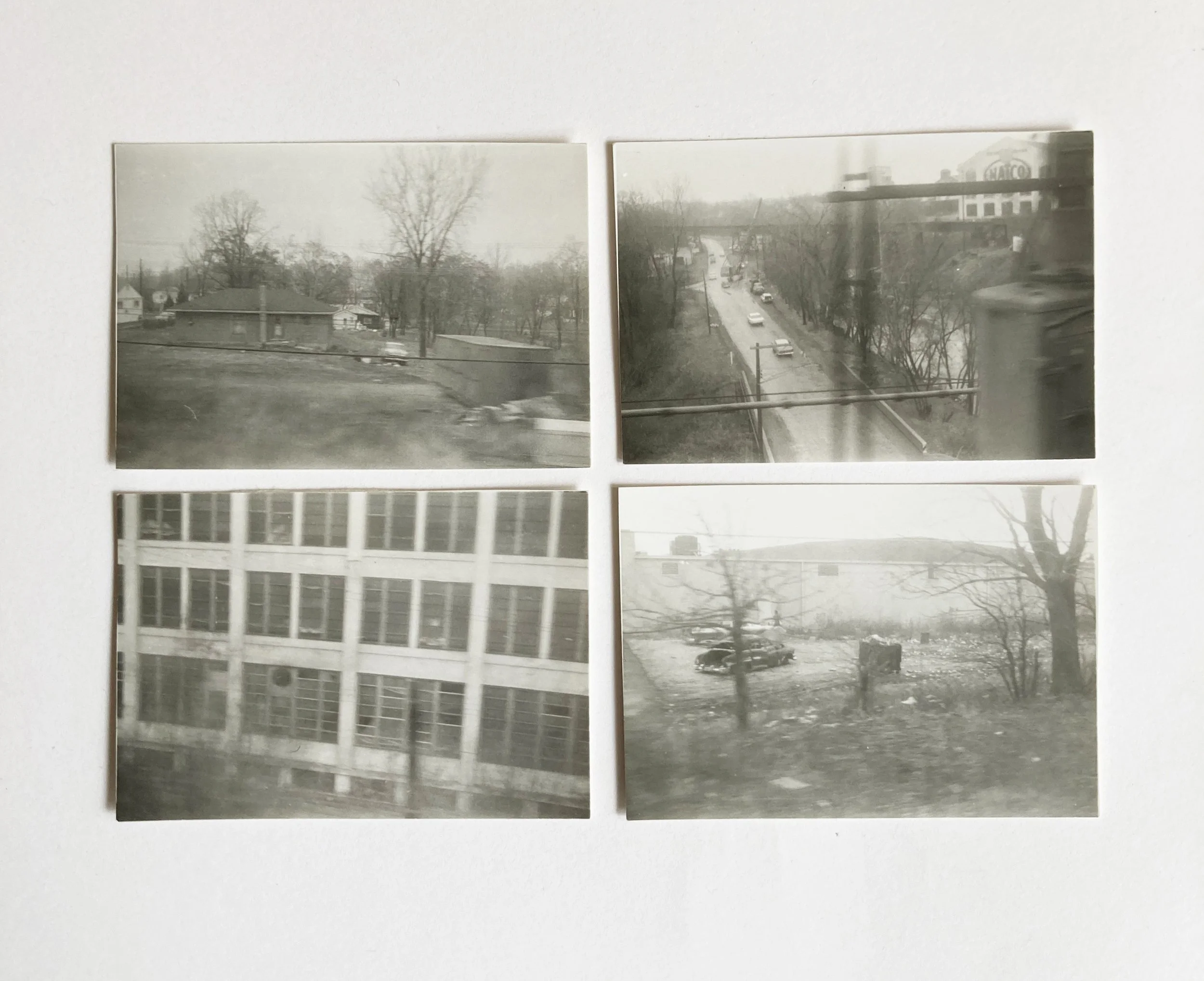
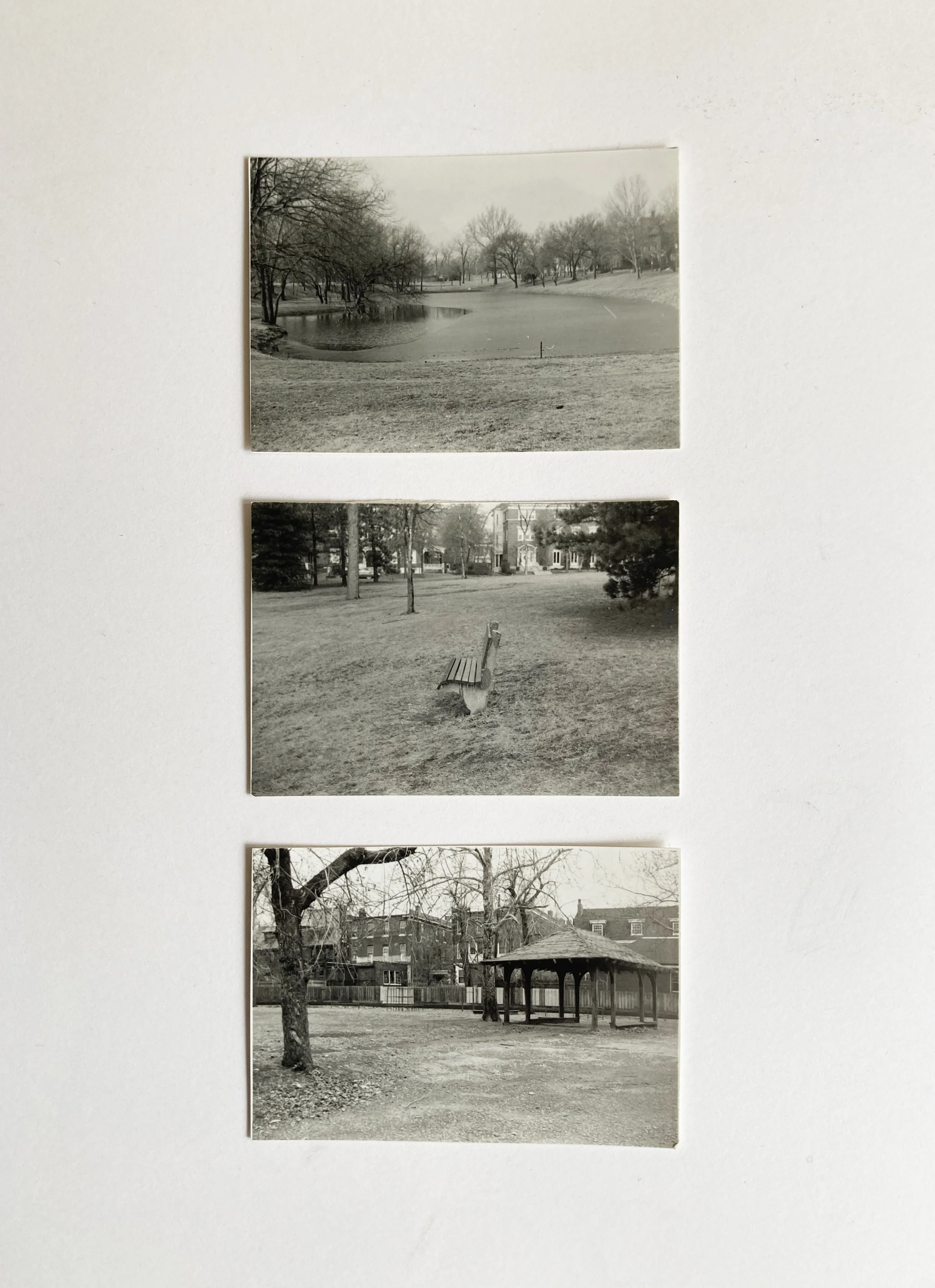
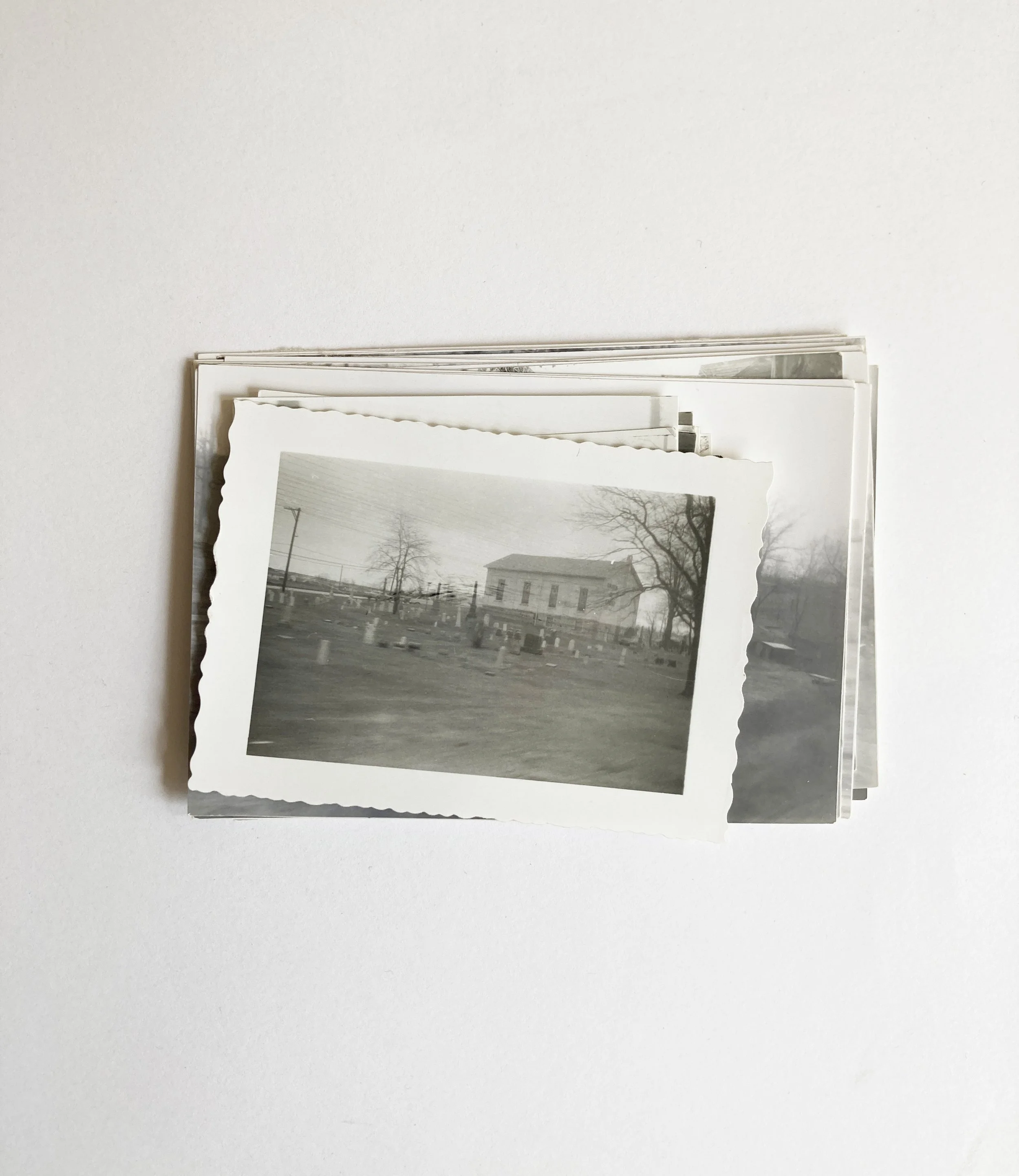
‘St Louis Return’: A collection of 23 original photographs taken by William Burroughs, shot during a trip to his hometown of St Louis, December 1964
Vintage silver gelatin prints, 81 x 118mm (13), 55 x 79mm (9), and 7 x 92mm (1, deckle edge)
[WITH:]
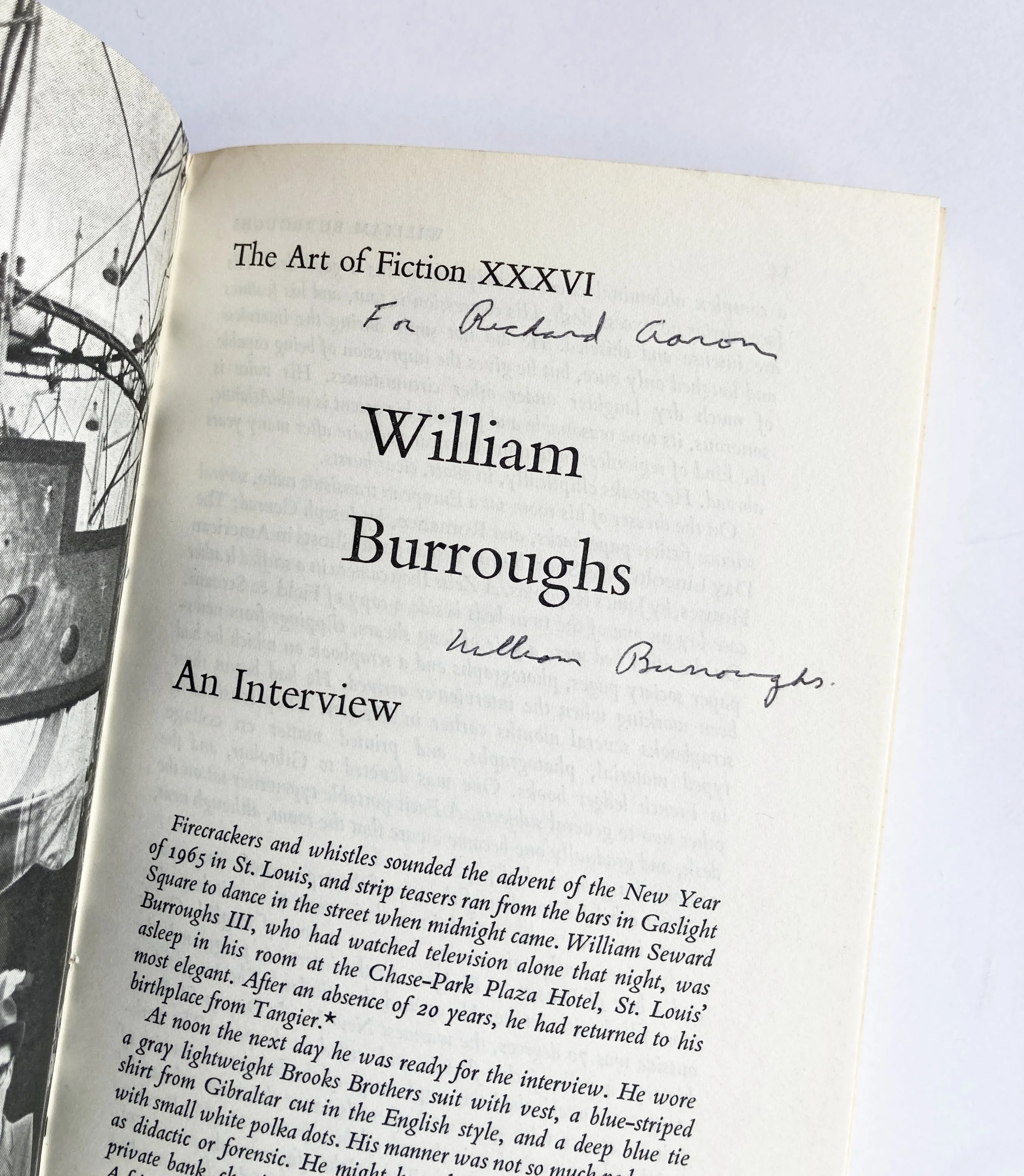
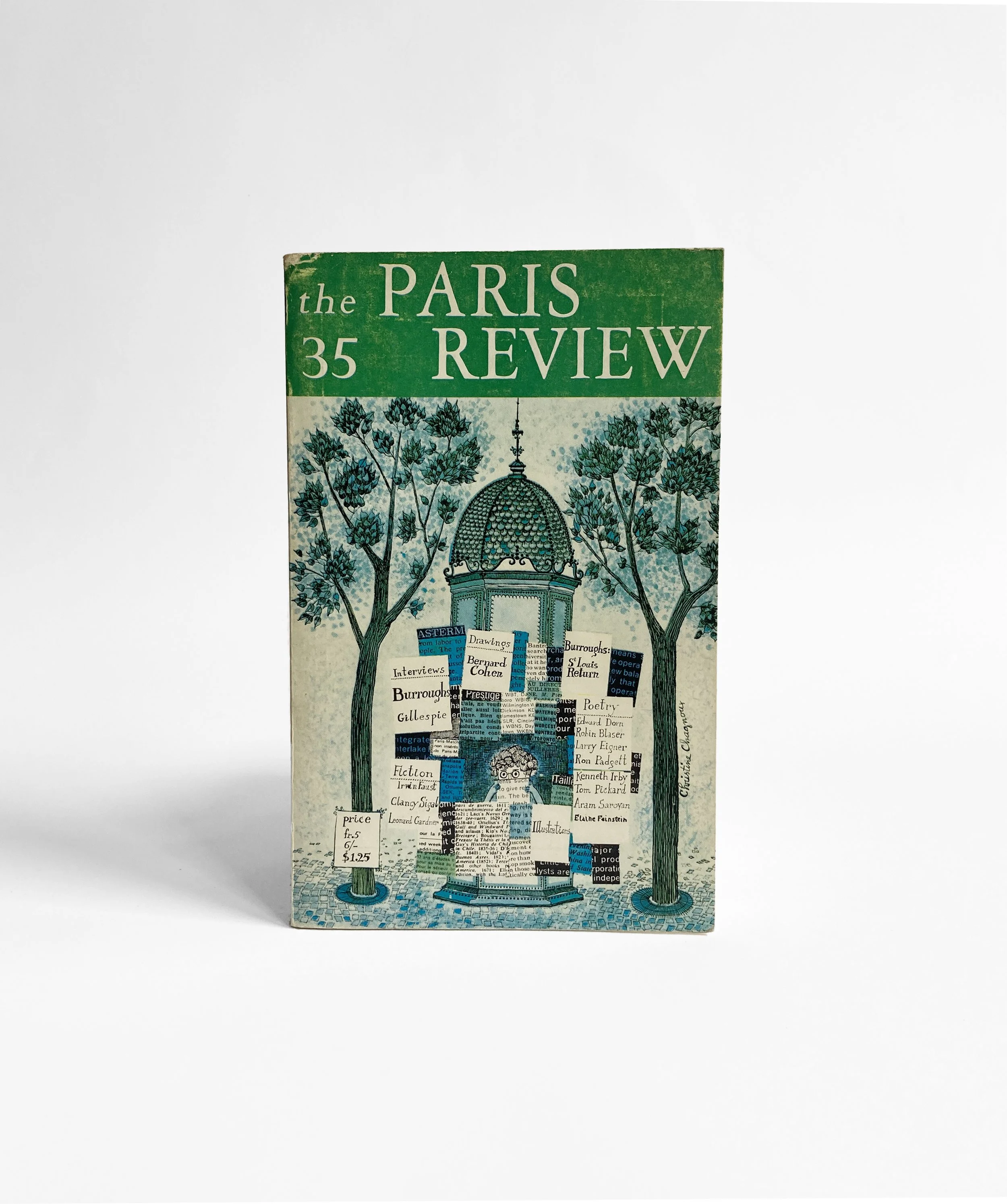
The Paris Review 35 (Fall 1965), containing ‘St Louis Return’, as well as ‘The Art of Fiction: An Interview’; inscribed by Burroughs to the latter
[WITH:]
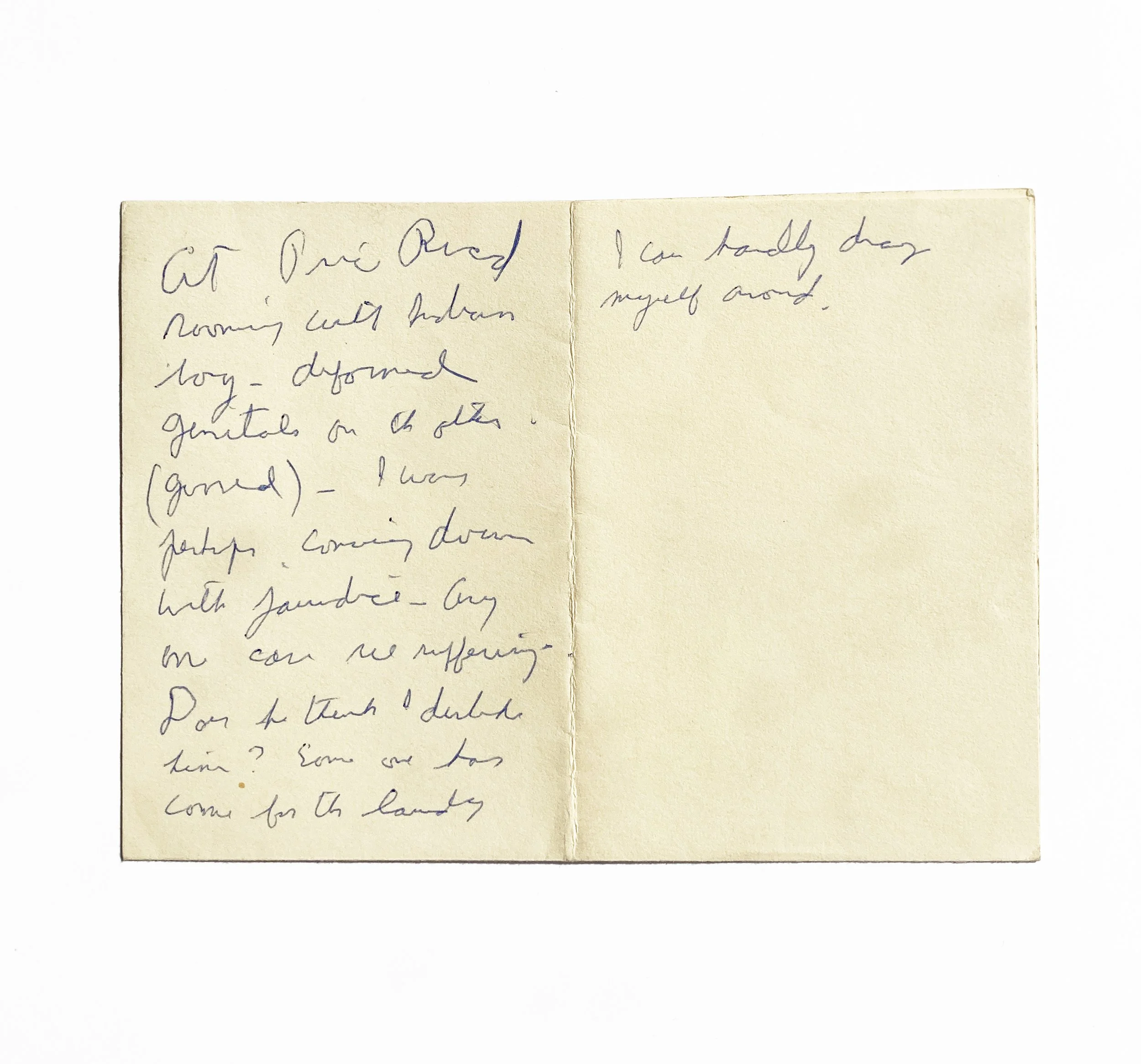
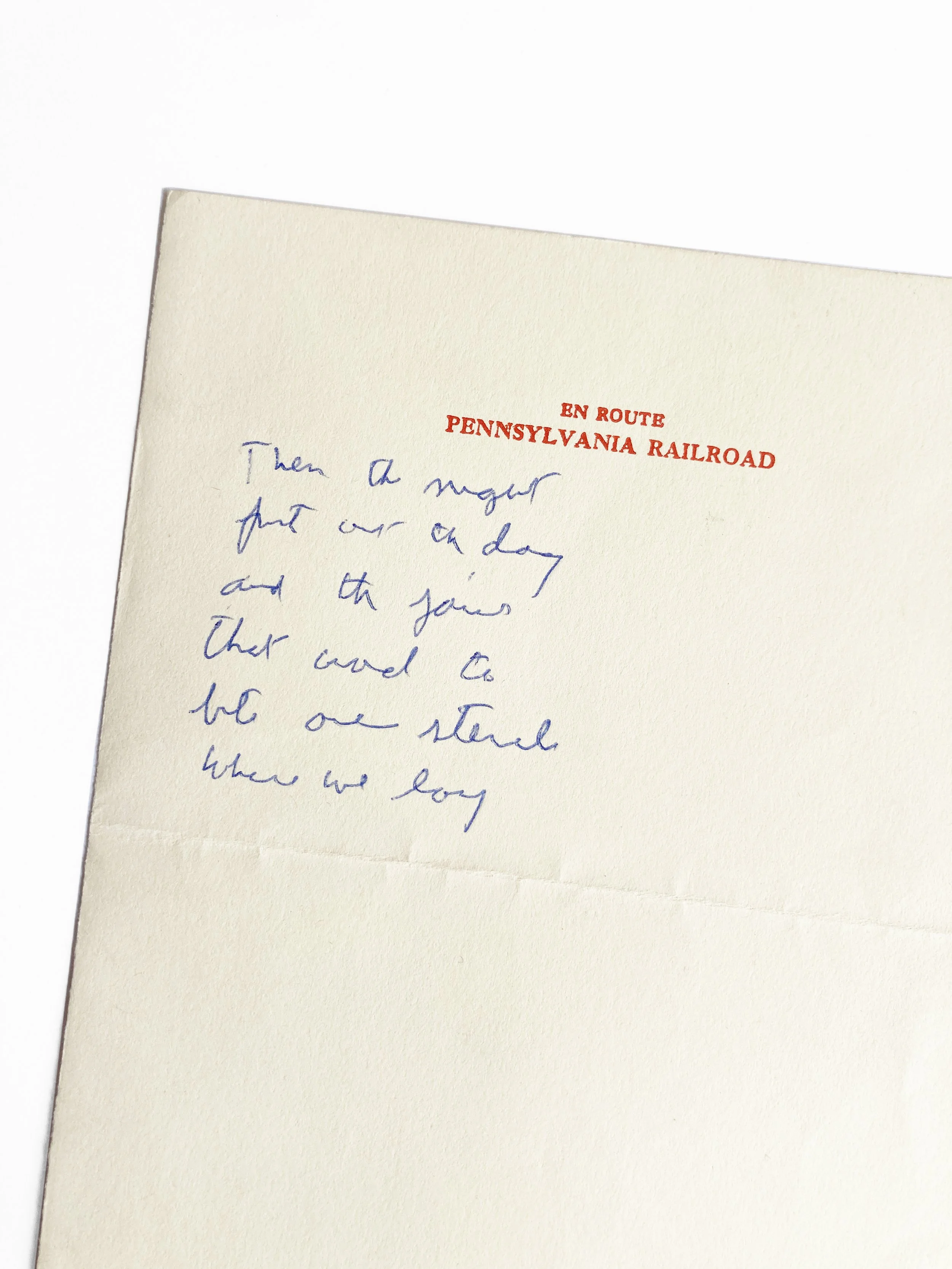
A manuscript with two brief texts Burroughs’ hand, on Pennsylvania Railroad paper, likely written en route to St Louis
Bifolium, 177 x 128mm when folded; folded again by Burroughs, making 4 panels, of which 3 are used
A superb and highly evocative collection, from Burrough’s 1964 wintertime trip to his hometown of St Louis, on a commission from Playboy magazine. Comprising: a large group of original photographic prints from Burroughs’ own collection; a short manuscript apparently written en route; and a signed copy of The Paris Review containing ‘St Louis Return’, which describes the trip and Burrough’s photographic procedure.
Fully nineteen of these photographs were taken from the moving train – a process explored by Burroughs in the accompanying text ‘St Louis Return’, which was rejected by Playboy but published in 1965 in The Paris Review:
Snapping an occasional picture with my Zeiss Ikon, I could not but lament the old brass spittoons, the smell of worn leather, stale cigar smoke, steam iron and soot. Looking out the train window—click click clack—back back back—Pennsylvania Railroad en route four people in a drawing room
Sad toy train it’s a long way to go see on back each time place what I mean dim jerky far away. / Take/ Look out the window of the train. Look.
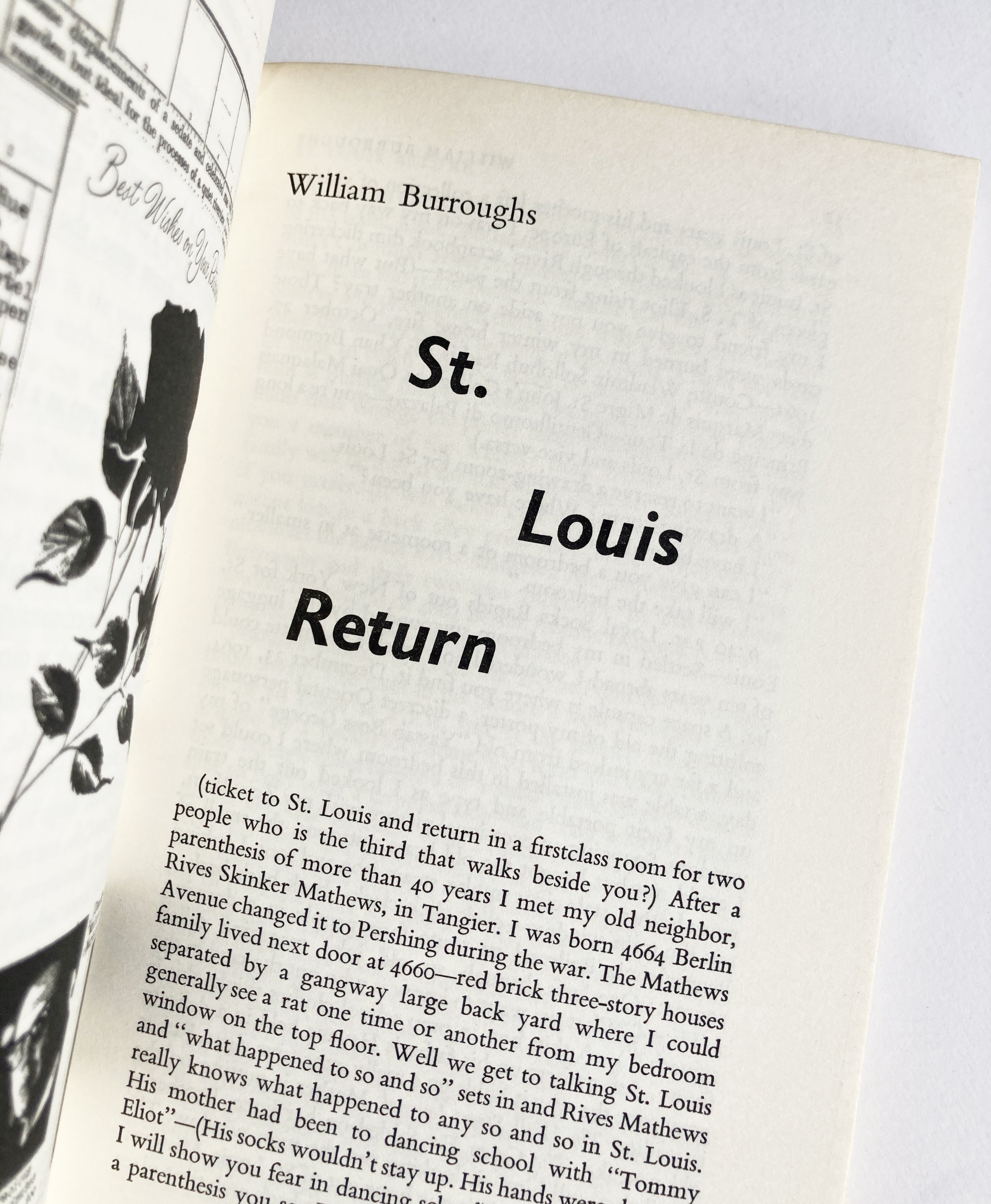
In this way, ‘St Louis’ return uses the idea of fixing an image as a start-point for examining the mental process of return. Burroughs digresses, and recalls details; but he also describes the process of writing and taking photographs while on the move, interspersing ‘/Take/’ throughout the piece, literally documenting the photographs collected here:
Look out the train window/Take/: acres of rusting car bodies—streams crusted with yesterday’s sewage—American flag over an empty field—Wilson Stomps Cars—City of Xenia Disposal—South Hill a vast rubbish heap—Where are the people ? What in the name of Christ goes on here ? Church of Christ / Take/ crooked crosses in winter stubble—The porter knocks discretely.
“Half an hour out of St. Louis, sir.’’
At least two of the photographs alluded to here are amongst those offered.
We propose that the short texts also offered were composed while travelling: they are written on paper bearing the letter head ‘En Route / Pennsylvania Railroad’ (note that ‘Pennsylvania Railroad en route’ features in the quotation above). They also have the appearance of hasty composition, perhaps on a rattling train. One is apparently a poem, beginning ‘Then the night / put out the day’ – though this is a tentative reading and both texts are hard to read. The longer piece is apparently a fragment of prose, perhaps opening ‘At Price Road’ (a place mentioned in the text), and continuing ‘…rooming with Indian boy - deformed genitals on the other - I was perhaps coming down with jaundice - Anyone can see suffering…’
In St Louis Burrough’s continued to take photographs, and to explore old haunts, though the failure to access the world of the 1920s is continually recorded in both his prose and in the photographs themselves:
Clayton and the West End suburbs now built up beyond recognition after 20 years absence. In the 1920’s my family moved out west on the Price Road—(700S./ Take/and just down the road is the John Burroughs School and there is the locker room door/Take/where I stood one afternoon a long time ago and watched the torn sky bend with the wind lightning struck the school just there/ Take/—(Whoever said lightning never strikes twice in the same place was no photographer.)
These photographs, and ‘St Louis Return’, have only been treated in the Burroughs scholarship on a handful of occasions, notably in 2014 when six of these prints were exhibited at The Photographers’ Gallery in London in 2014, and the episode was then discussed by John Sears in Taking Shots: The Photography of William S. Burroughs (pp. 66–77):
The text Burroughs provided was neither autobiographical nor conventionally nostalgic, nor even simply representational; it lacked even basic elements of plot sequentiality. And yet, like the photographs, it’s clearly structured around an interrogation of the traces, effects, consequences, desire for and limits to temporality and temporisation.
As Sears points out, Burroughs’ text is intimately connected with the work of T.S. Eliot – another St Louis native, who died just as Burroughs was composing his piece, in January 1965. Both The Waste Land and Four Quartets are obviously relevant to Burroughs themes of return, nostalgia, longing and place. Burroughs’ last line brings gives a poignant visual gloss to Eliot’s famous ‘fragments I have shored against my ruin’:
I have returned to pick up a few pieces of sunlight and shadow – silver paper in the wind-frayed sounds of a distant city.
All items in very good condition. The photographs exhibited at The Photographers’ Gallery with minor tape residue to the reverse; The Paris Review a little worn to the covers as often.