

AUTHOR’S COPY WITH MANUSCRIPT MAP
AUTHOR’S COPY WITH MANUSCRIPT MAP
BUCKLEY, Edith E.
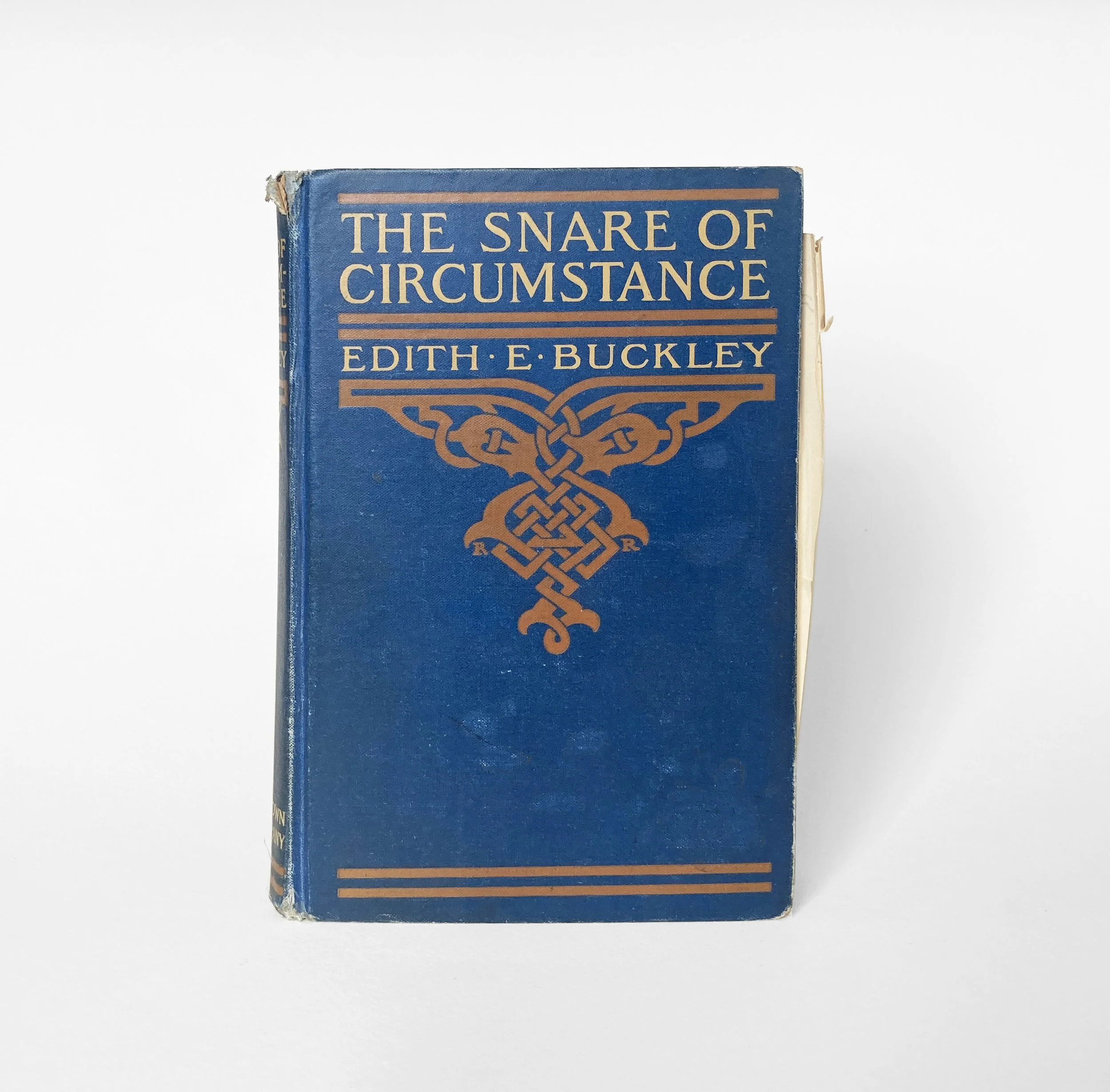
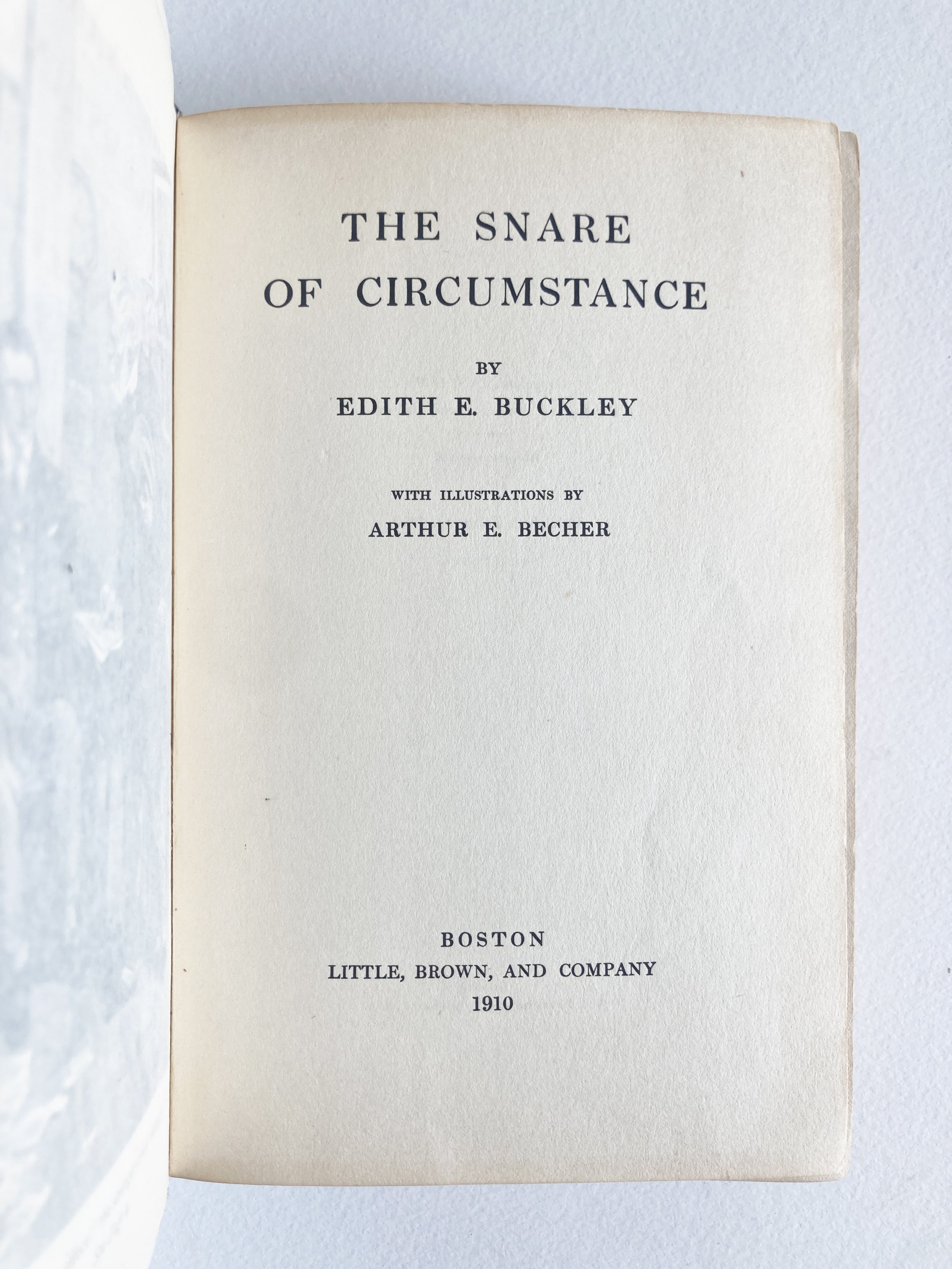
The Snare of Circumstance
Boston: Little, Brown and Co., 1910
8vo; 198 x 136mm; pp. vi, [2], 367, [4, ads], four plates of illustrations
Second printing. Hardcover in blue decorative cloth. Fair condition: binding somewhat worn and front hinge a little loose; numerous inserts inside front cover; manuscript map poorly folded and worn with some loss to the lower edge
Essay
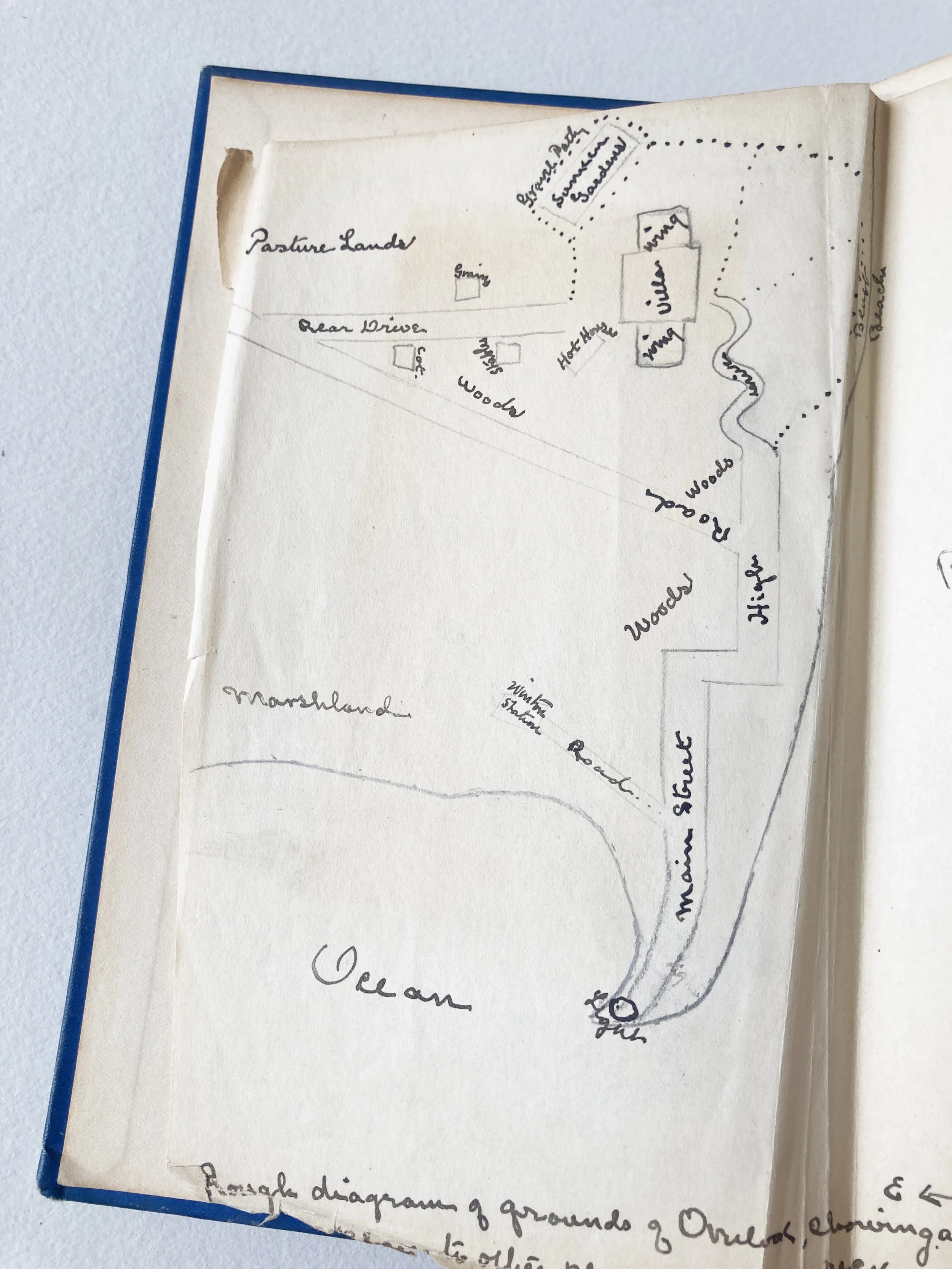
Crime writer edith buckley’s own copy of her sole novel, used as an archive of critical responses and including a manuscript map showing the critical locations in the plot.
The Snare of Circumstance was serialized in 1909 in The Sentinel, with a $50 prize offered to any reader who could predict the ending of the story. Little, Brown and Co. published the work in February 1910 and it was reprinted at least once soon afterwards.
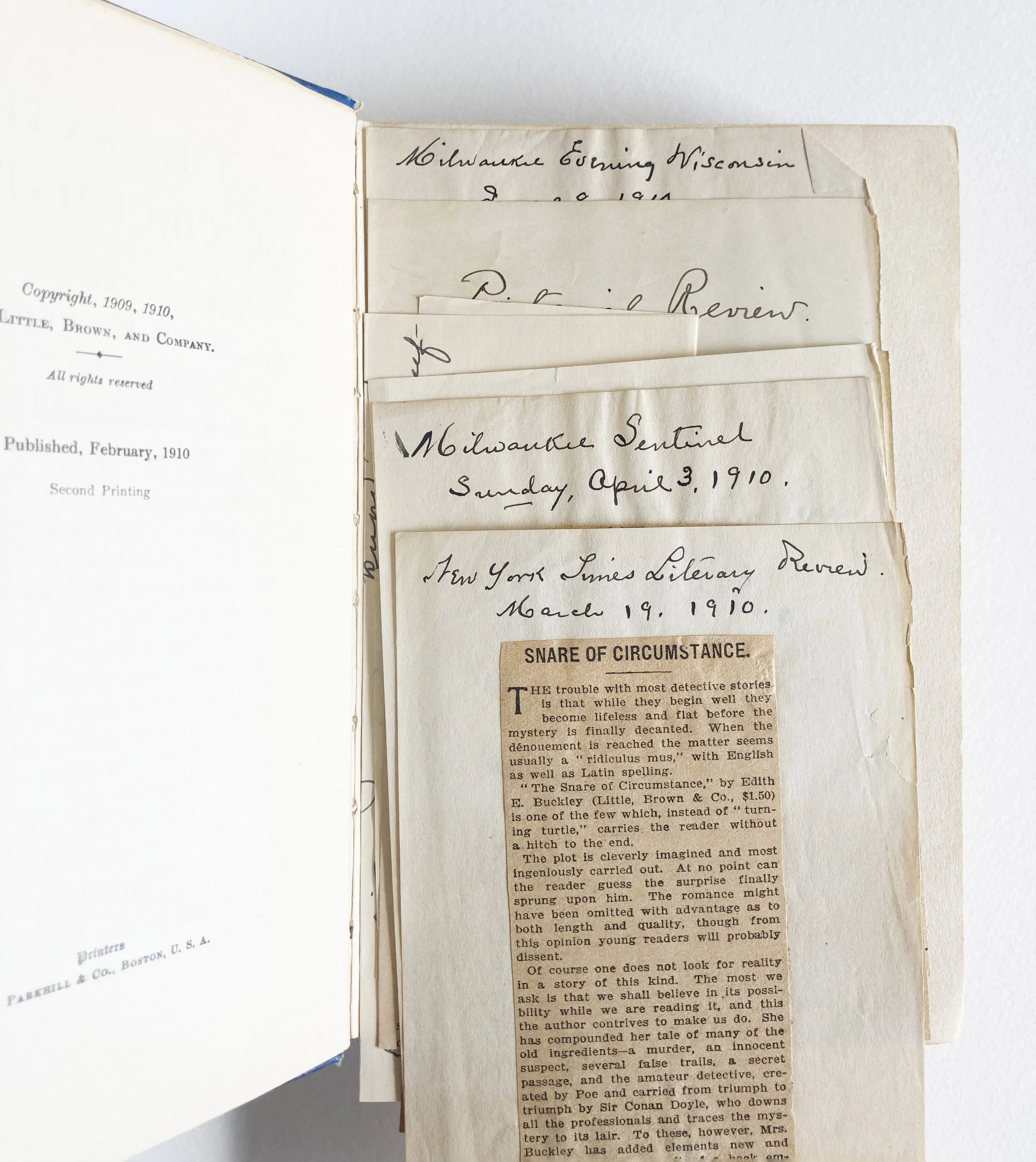
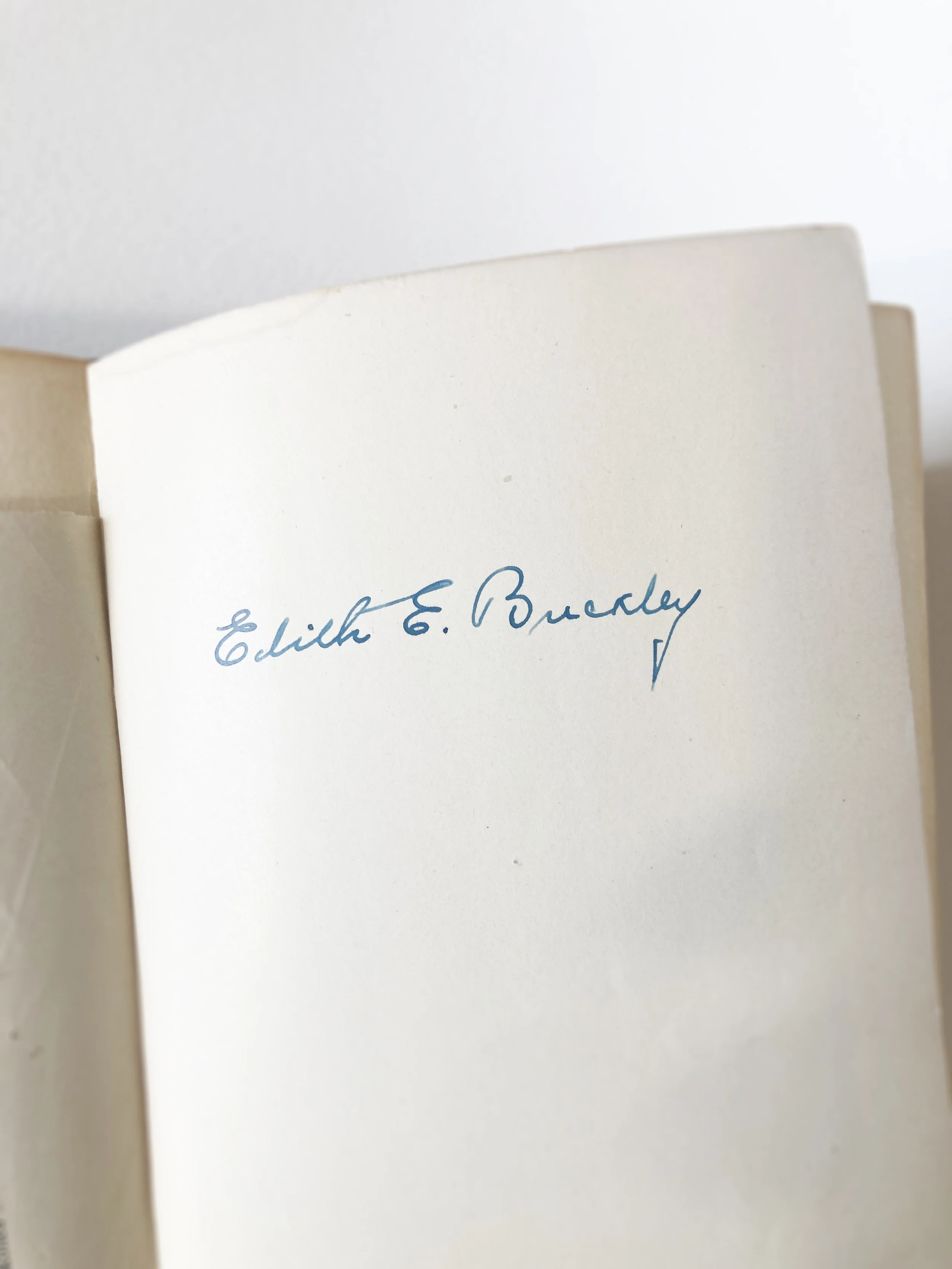
This copy was owned by Buckley herself, with ‘Author’s Copy’ inscribed inside the front cover, and Buckley’s signature to the verso of the frontispiece. She has collected no fewer than 12 notices of the book, most of these mounted, inscribed and laid in – all are favourable. One letter from a friend offers more personal praise. Most strikingly, however, there is a manuscript plan of the locale in which the plot takes place, pasted to the front flyleaf, recalling the later plans at the front of, inter alia, Agatha Christie’s The Mysterious Affair at Styles and Margery Allingham’s Sweet Danger.
H.L. Mencken reviewed the book favourably in The Smart Set (Vol. 31, 1910, p. 157), and the New York Times Literary Review was effusive:
The plot is cleverly imagined and most ingeniously carried out. At no point can the reader guess the surprise finally sprung upon him. [Buckley] has compounded her tale of many of the old ingredients – a murder, an innocent suspect, several false trails, a secret passage, and the amateur detective, created by Poe and carried from triumph to triumph by Sir Conan Doyle, who downs all the professionals and traces the mystery to its lair. To these, however, Mrs. Buckley has added elements new and original, with the result of a book eminently qualified to help us in our unending effort to fill what we all long to augment – out time.
(The map does not indicate the location of the secret passage.)
Of Buckley herself little is known, other than that she was a Milwaukee resident and was called Edith Elsie prior to her marriage.
References
The Origins of the American Detective Story, p. 186; American Fiction, 1901–1925: A Bibliography, B1176