

ELAINE MORGAN'S AQUATIC APE, SIGNED COPY
ELAINE MORGAN'S AQUATIC APE, SIGNED COPY
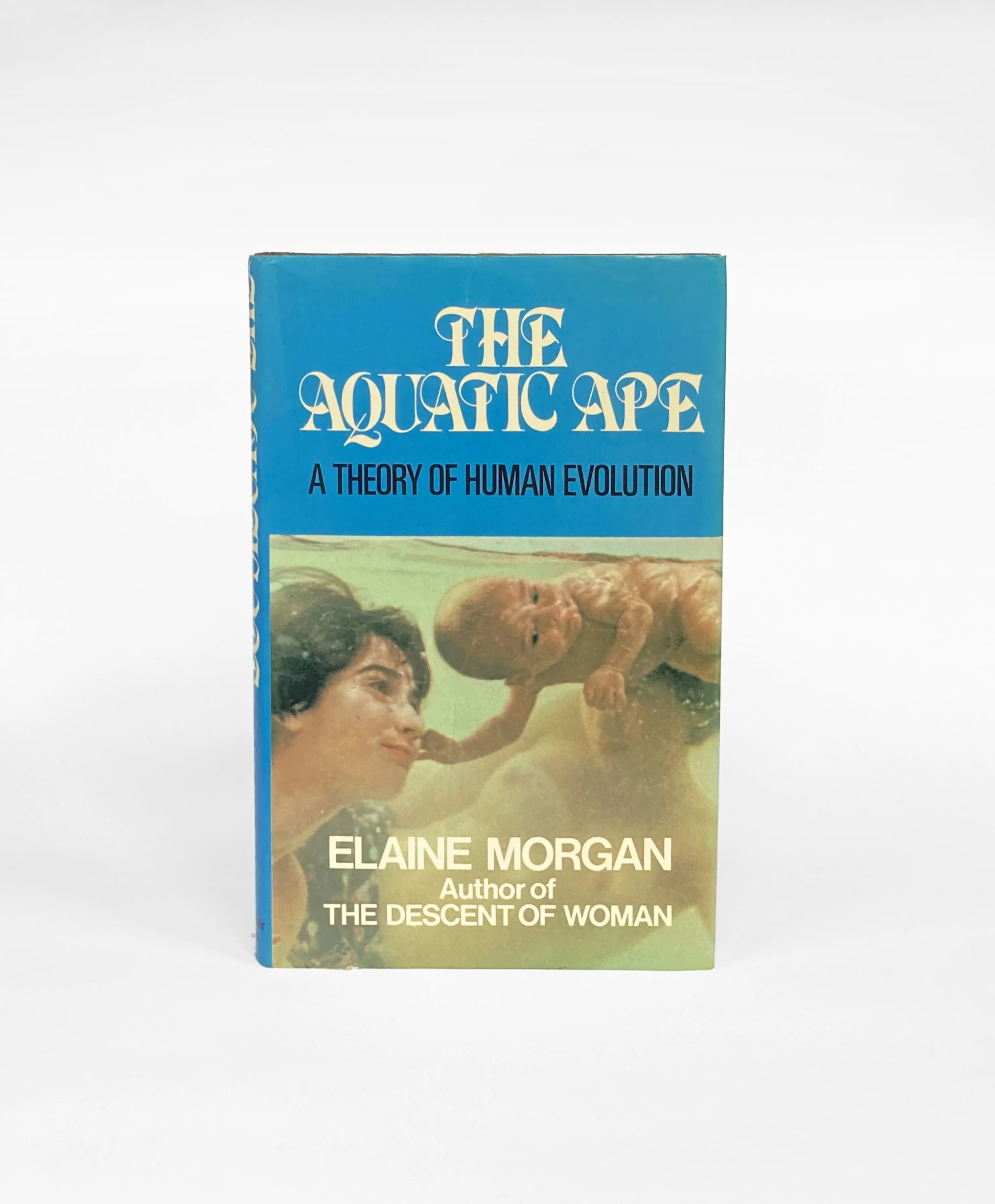
MORGAN, Elaine (1920–2013)
The Aquatic Ape: A Theory of Human Evolution
London: Souvenir Press, 1982 [first edition]
Hardcover in full colour unclipped dust-jacket, 222 x 146mm; pp. 168, frontis., 8 b/w plates; very good
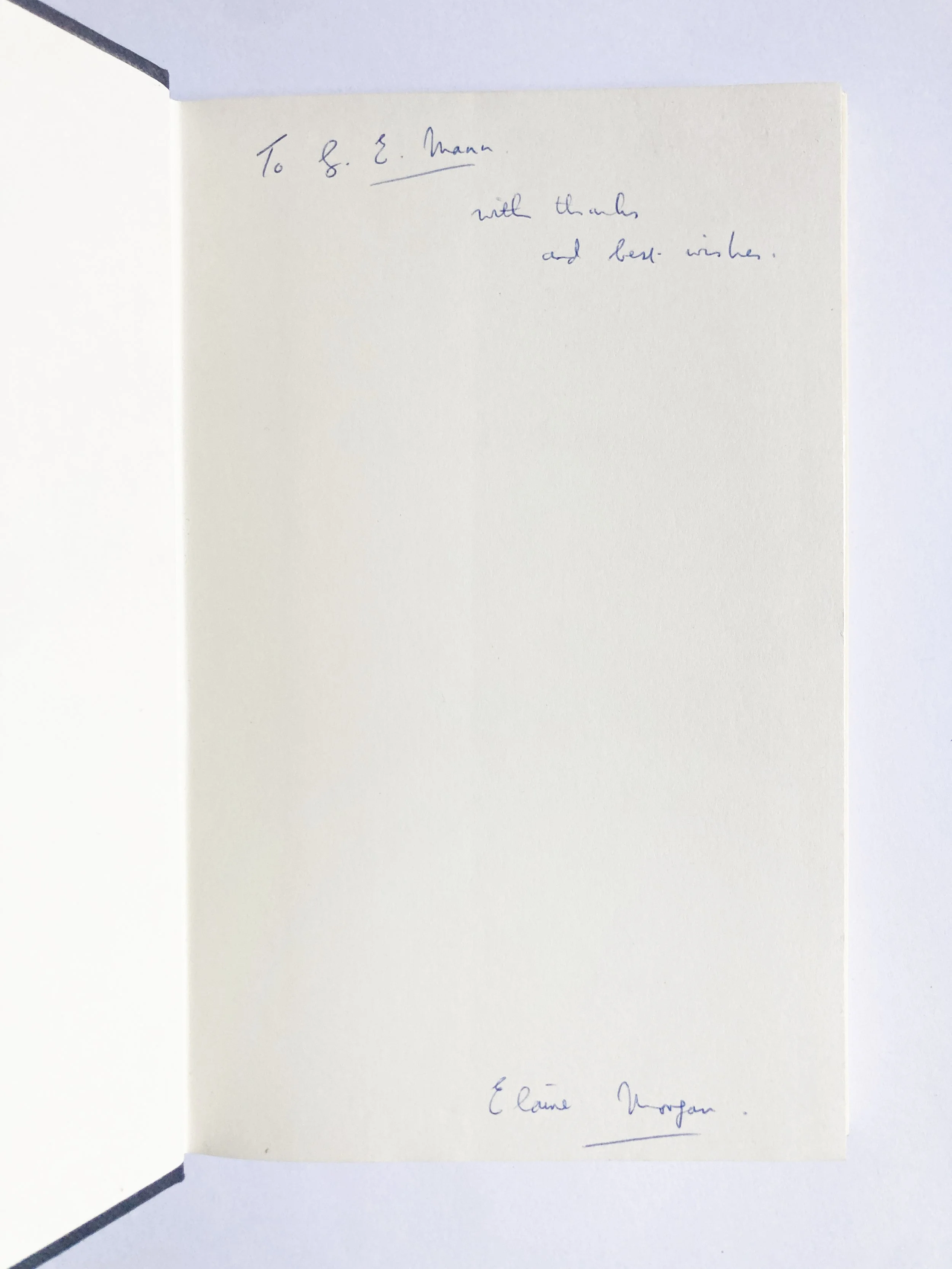
A classic text in the history of heterodox science, inscribed by Morgan to the front free endpaper.
The ‘Aquatic Ape Hypothesis’ (AAH) has a long pre-history, in fact originating in questions about whether humans are a species of ape at all, perhaps instead being related to earlier marine mammals. The first major neo-Darwinian to advocate for the theory was Alistair Hardy – but Elaine Morgan is the most famous AAH advocate, first supporting the theory in her 1972 bestseller The Descent of Woman, where she used it to support her far-sighted ideas about the role of maternal care in human evolution.
The fundamental idea of AAH is that certain distinctive human traits – such as bipedalism, relative hairlessness, subcutaneous fat, and aspects of breath control – evolved during a period when early human ancestors spent significant time in aquatic or semi-aquatic environments.
In spite of fierce criticism of the theory following The Descent of Woman, Morgan decided to refine the AAH and present it in a stand-alone work – the present volume – published in 1982. The response was mixed, to say the least. It is fair to say that scientific consensus is against the AAH, and the fossil evidence for it is limited.
However, it is by no means entirely discredited. Philosopher Daniel Dennett, for example, has written in support of AAH, and David Attenborough has explored the topic on a number of occasions for television and radio. At a methodological level too, AAH can be seen as a critique of implicit gender norms in palaeoanthropology, and as an example of ‘outsider science’.
This copy bears a warm inscription from Morgan to a G.E. Mann, almost certainly the anatomist who wrote on the torus auditivus, an arc-shaped mucosal protrusion in the nasopharynx of great importance in understanding (potential) aquatic adaptation.
Very good condition: jacket with a flattened central crease, rear cover age-toned; internally very good.
References: Erika Milam, ‘Dunking the Tarzanists: Elaine Morgan and the Aquatic Ape theory’, in Outsider Scientists: Routes to Innovation in Biology (University of Chicago Press, 2013)