

Rimbault’s Pianoforte: musicologist Susi Jeans’ copy
Rimbault’s Pianoforte: musicologist Susi Jeans’ copy
[JEANS, Susi (1911–1993) – her copy], RIMBAULT, Edward F. (1816–1876)
The Pianoforte, Its Origin, Progress, and Construction
London: Robert Cocks and Co., 1860
Large clothbound 4to, 326 × 270; pp. xvi, 420 [with a coloured frontis.], ‘Addenda to subscription list’ tipped in to rear
An excellent association copy of this standard work on the piano: from the library of Susi Jeans (1911–1993), the renowned keyboard specialist and muscologist. Also bearing the bookplate of the nineteenth century composer Algernon Sidney Rose (1859–1934).
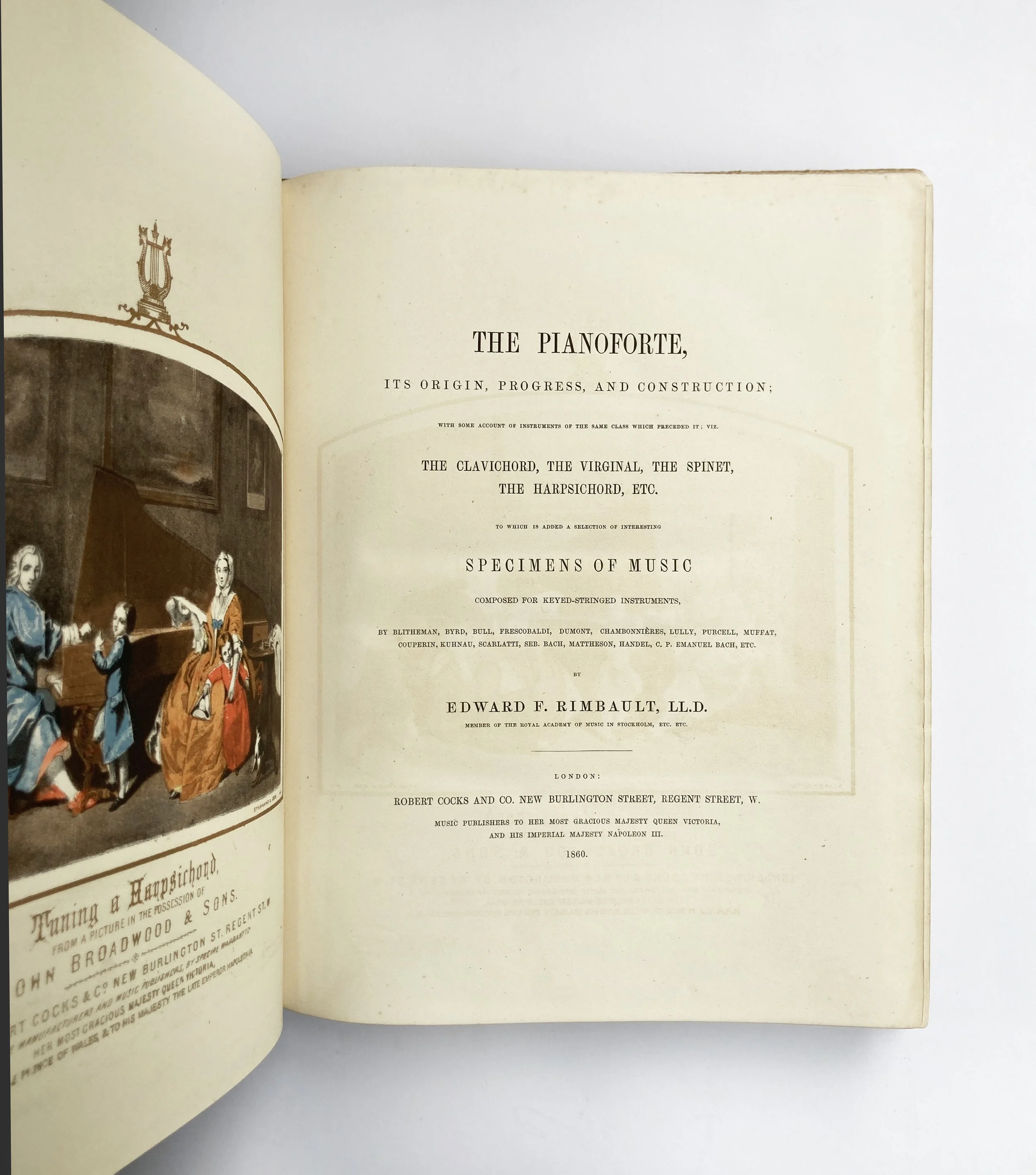
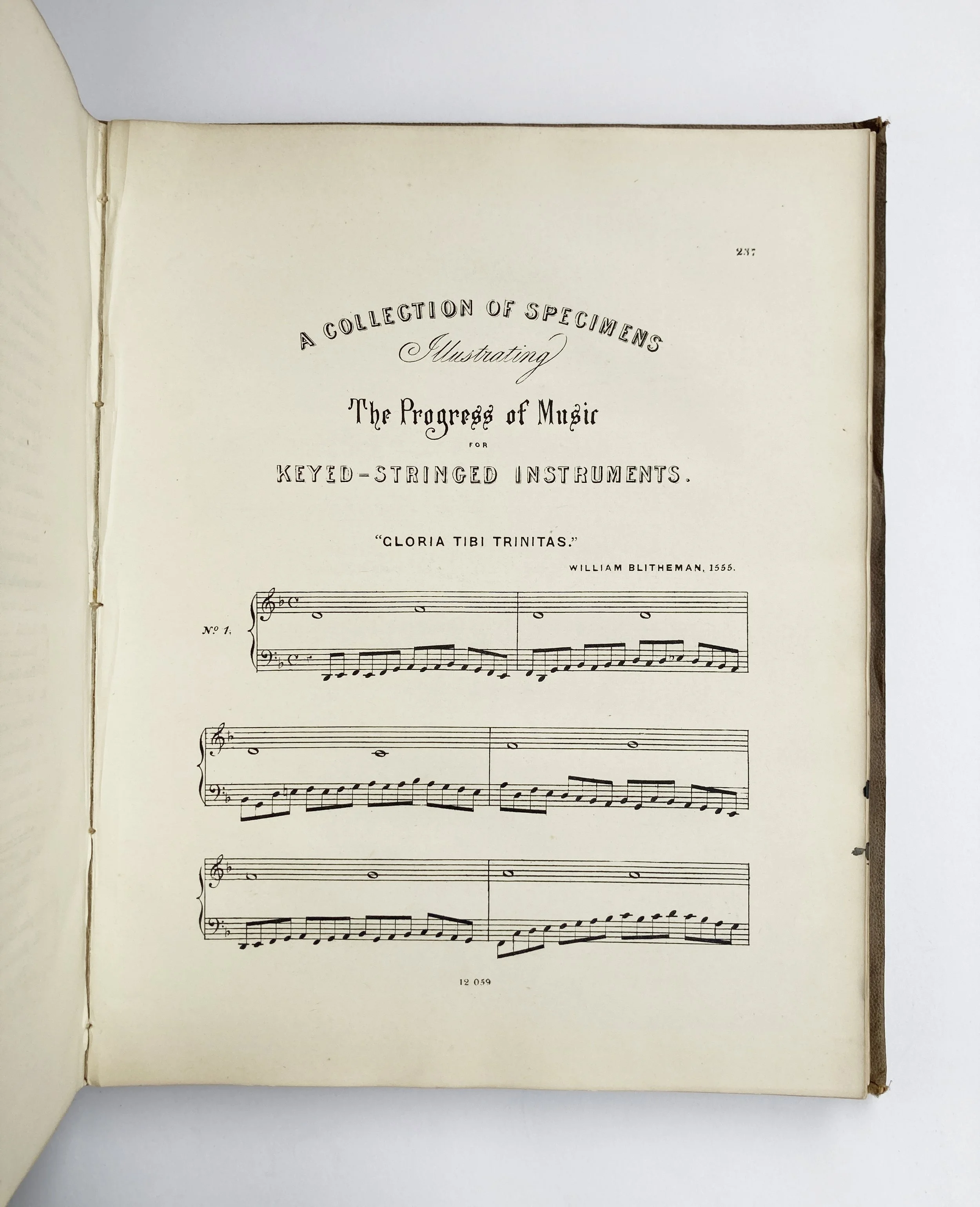
Rimbault’s work is a handsome production, and an important source, especially for the technical developments leading up to the modern grand piano. The book is divided into three parts: a historical section; a treatise on the construction of the piano; and ‘a collection of specimens illustrating the progress of music for keyed-stringed instruments’, beginning with William Blitheman’s 1555 ‘Gloria Tibi Trinitas’, and including works by Byrd, Purcell, Scarlatti, Bach, and many others. There are some 58 woodcut illustrations, and a coloured frontispiece showing the tuning of a harpsichord.
The book’s first known author, Algernon Sidney Rose, was the composer of a number of works, including waltzes and marches, and in January 1895 gave a paper entitled ‘Greater Britain Musically Considered’ to the annual conference of the Incorporated Society of Musicians.
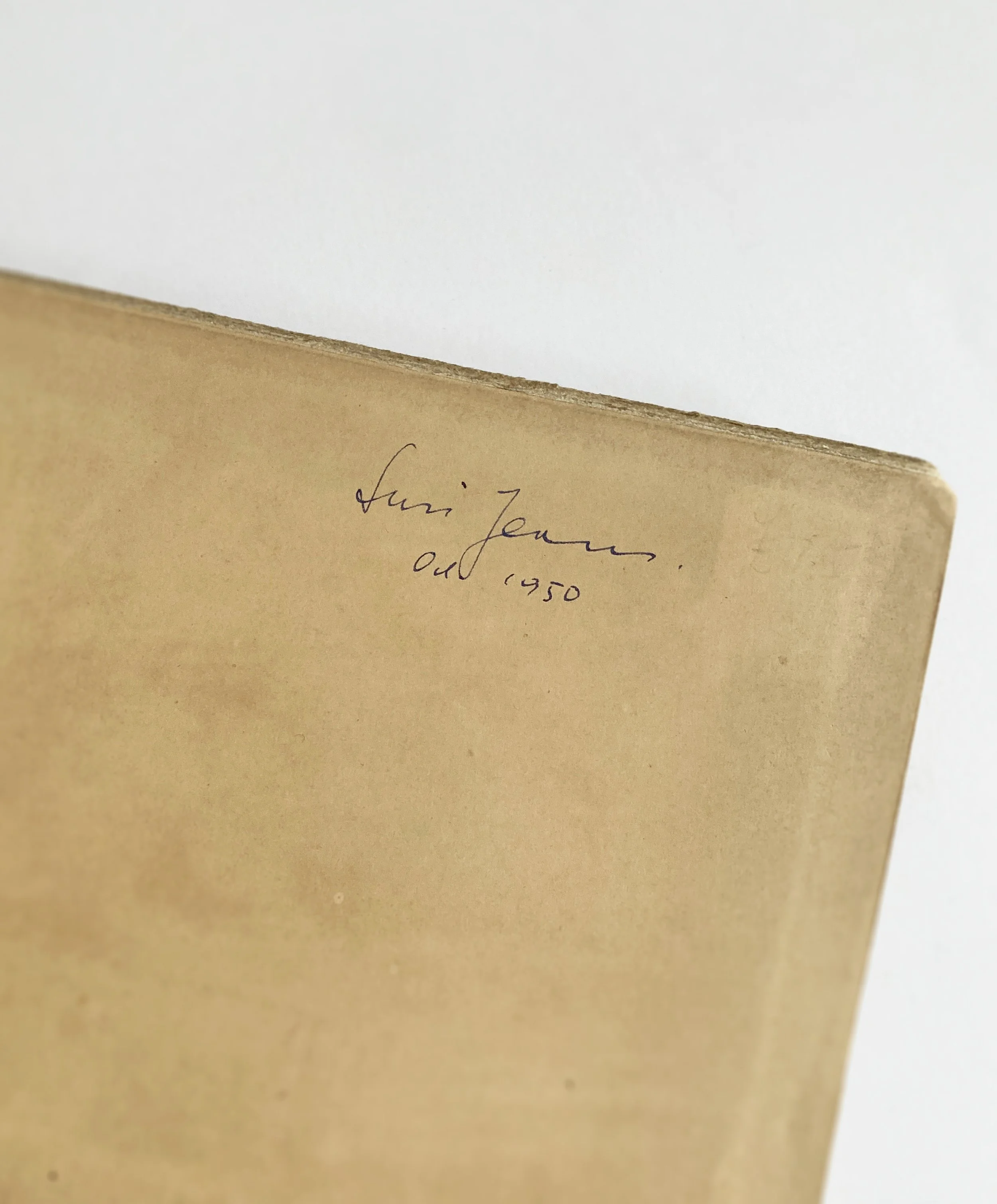
Susi Jeans, who acquired the volume in October 1950, was one of the most successful keyboard specialists and musicologists of her era. She was born Susanne Hock in Vienna in 1911 and trained initially as a pianist, studying at the Vienna Academy of Music with the composer Franz Schmidt, before turning increasingly to the organ. She subsequently studied with Franz Schütz in Vienna, Charles-Marie Widor in Paris, and Karl Straube at the Kirchenmusikalisches Institut in Leipzig, where she developed a lasting interest in historical organs and early keyboard music. Her discovery of the historic tracker-action organs of Gottfried Silbermann in Saxony was particularly influential in shaping her approach to performance.
In 1935 she married the British physicist and astronomer Sir James Jeans and settled in Surrey, where she established a celebrated collection of historic keyboard instruments and a centre for musical activity at Cleveland Lodge. As a performer she became an important advocate of Bach and earlier keyboard repertoire, as well as of the harpsichord and clavichord, at a time when these instruments were still comparatively neglected in Britain. Her concert tours, broadcasts and teaching brought historically informed approaches to organ and keyboard performance to a wide audience.
Jeans was also a prolific scholar, publishing research and editions of early music and corresponding with and encouraging composers of her own generation. Her pupils included several prominent British organists, and she continued to perform, teach and research internationally into old age. She died in Surrey in 1993, leaving an important collection of manuscripts and papers, now preserved in institutions including the British Library.
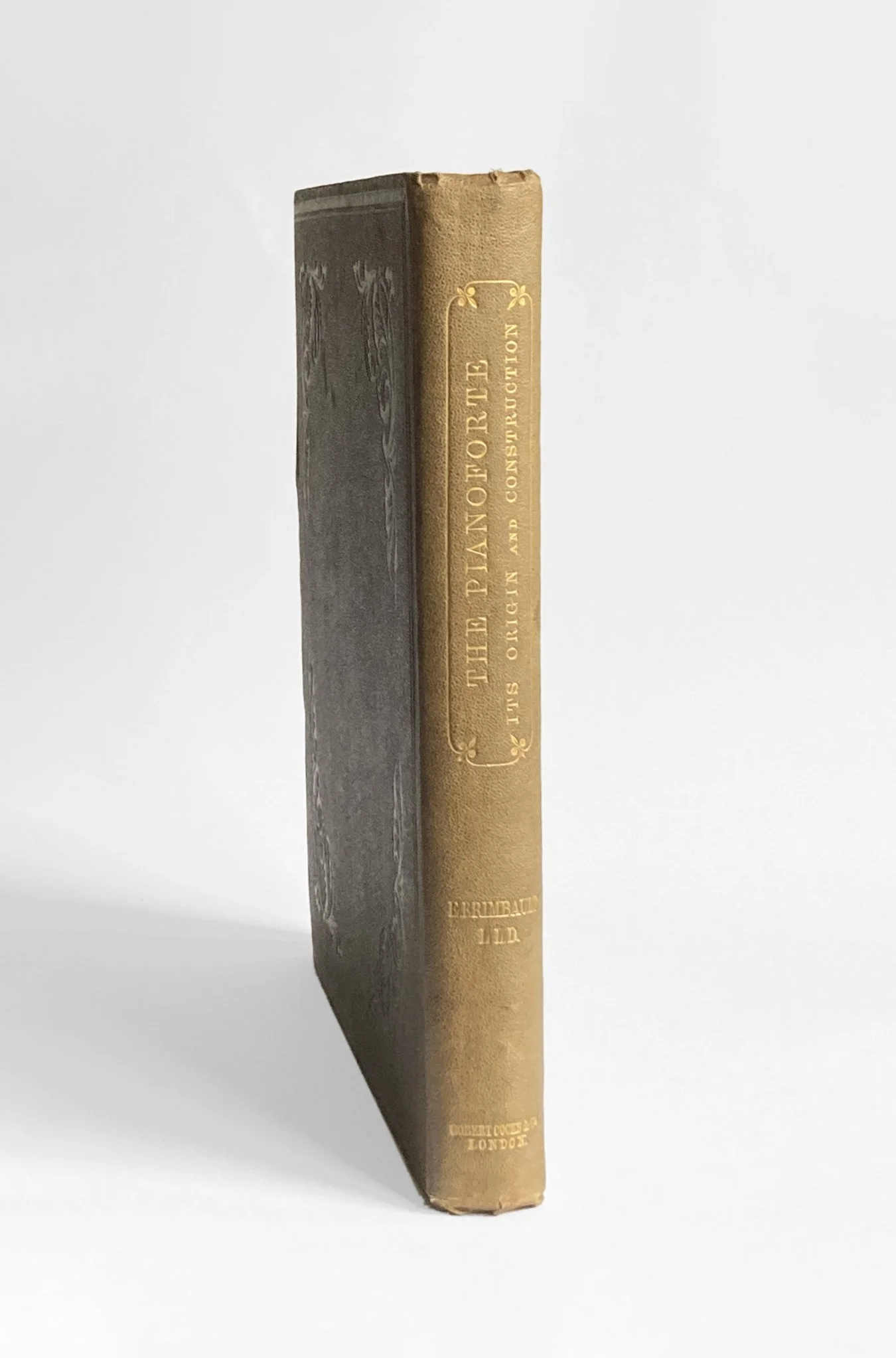
For a work that is often in a poor state of repair owing to its oversized format and paper stock, this volume is remarkably well preserved: the binding is somewhat faded to the edges and spine, and the corners are bumped, but internally the book is in excellent condition, noting only a couple of ink spots to the fore-edge, and some weakening of the spine at the beginning of the ‘collection of specimens’ of sheet music to the second half of the book.