

Constructing the Central Line: an important archive, 1896–1902
Constructing the Central Line: an important archive, 1896–1902
[LONDON UNDERGROUND; HUDDLESTON, Ferdinand (1857–1951)]
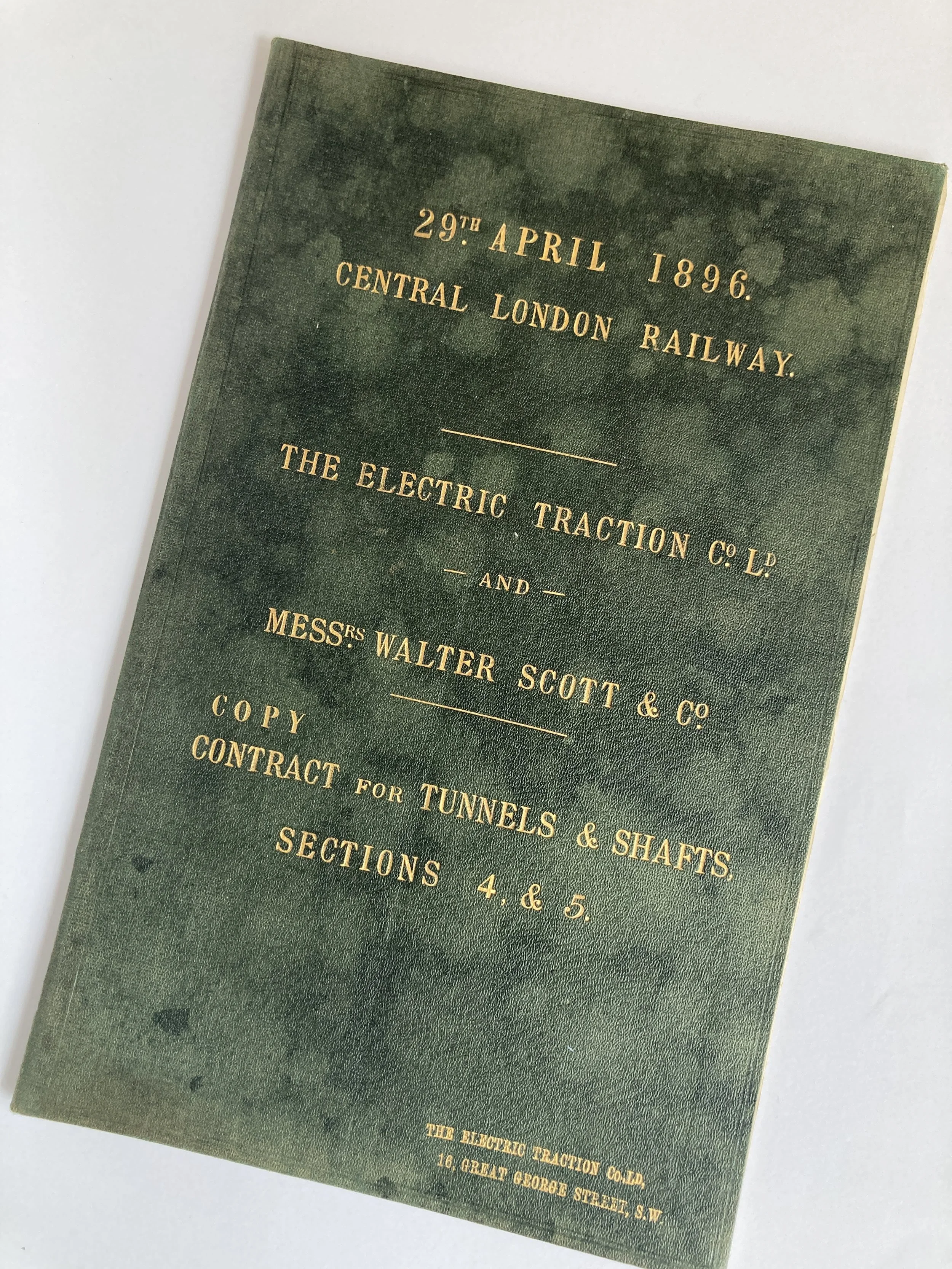
An archive relating to the construction of the Central London Railway [Central Line], 1896–1902
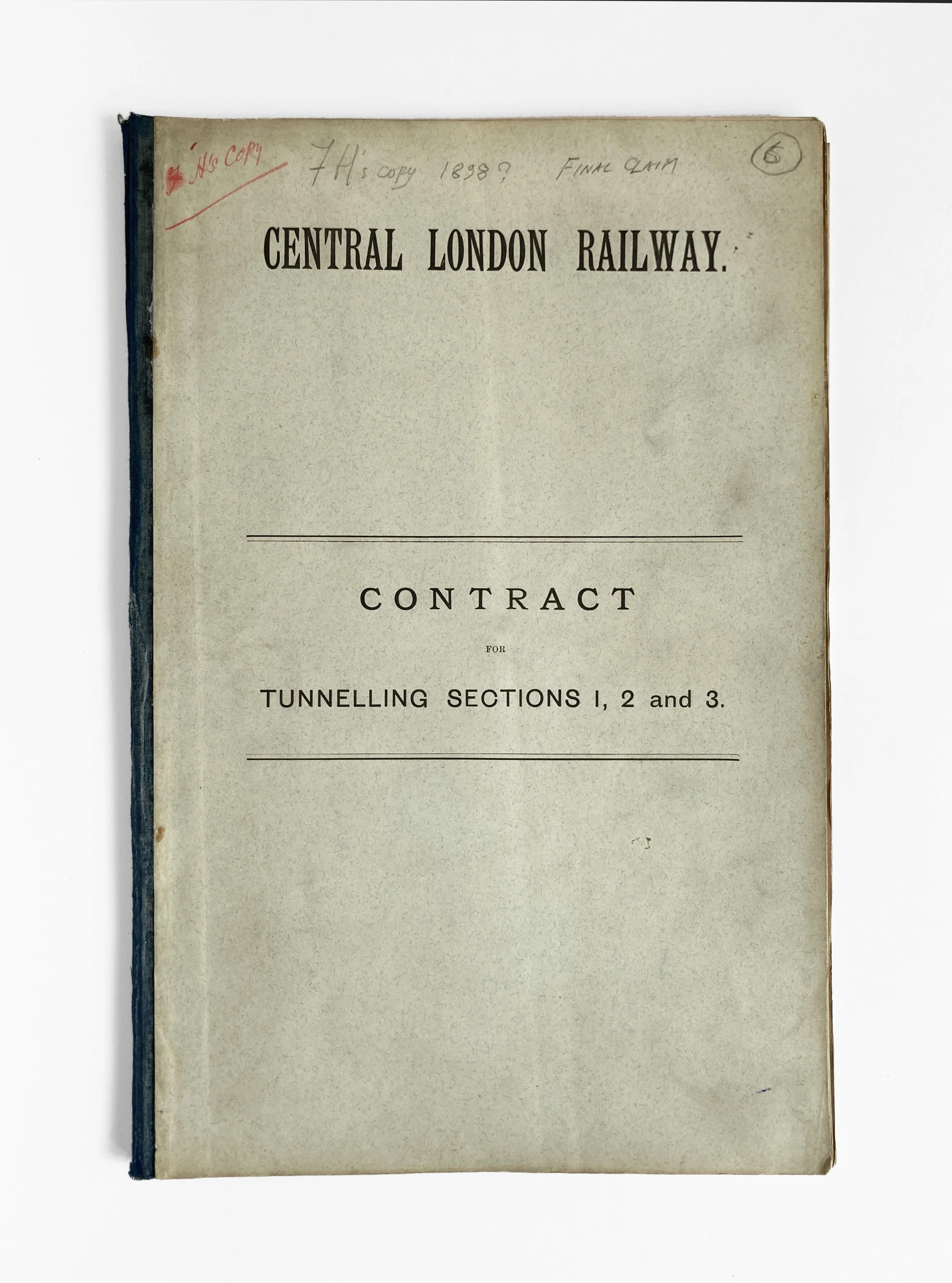
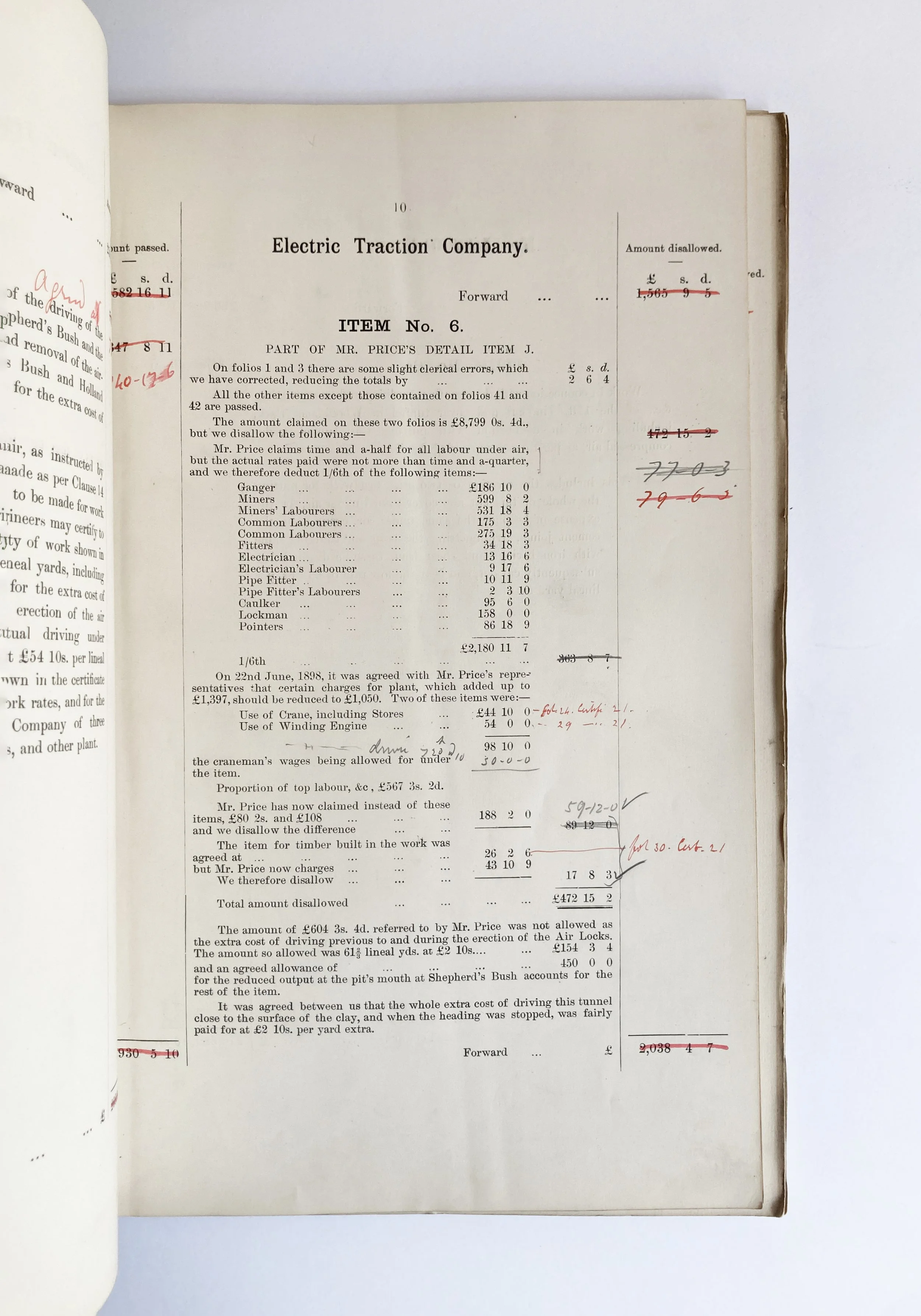
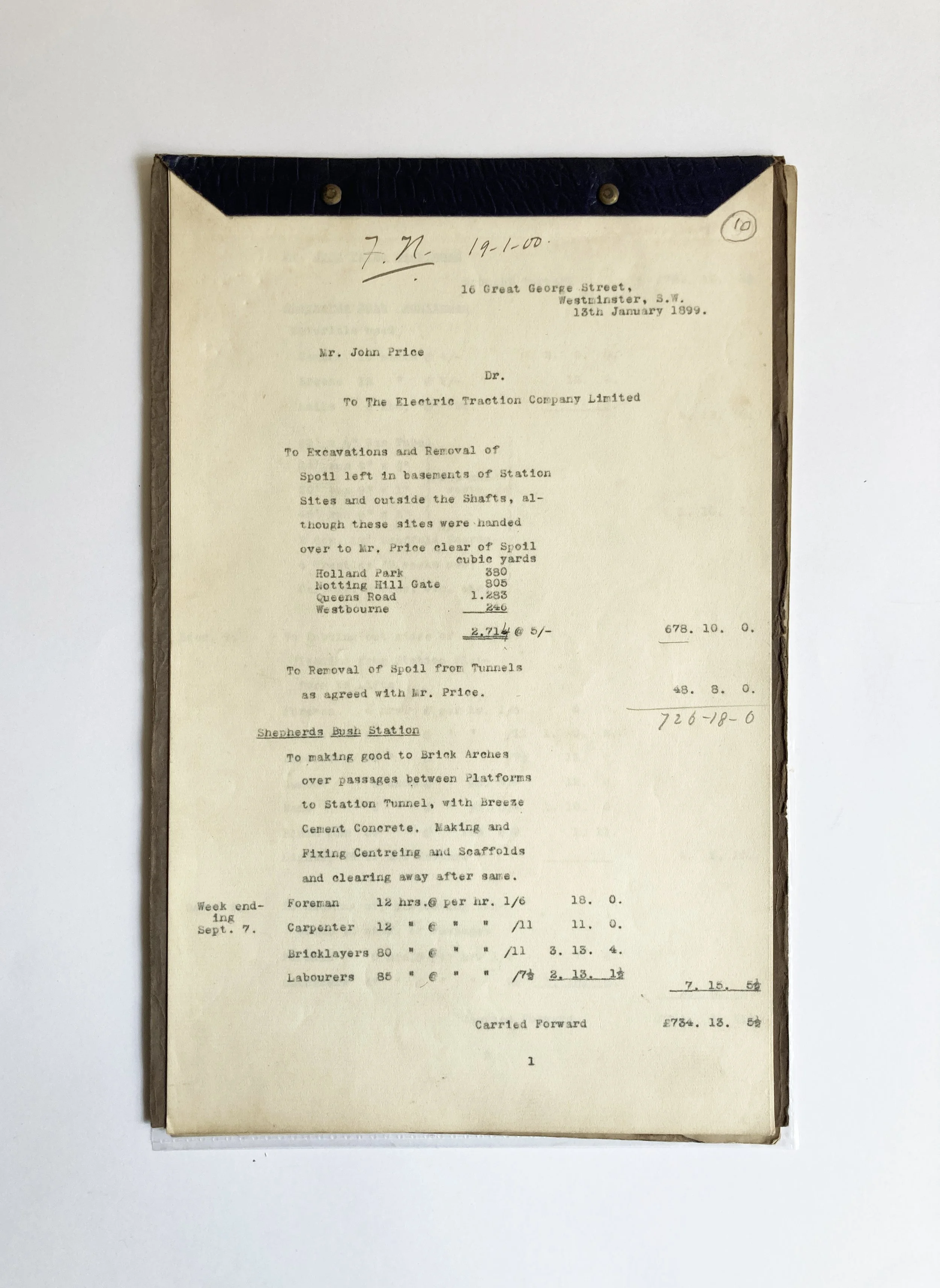
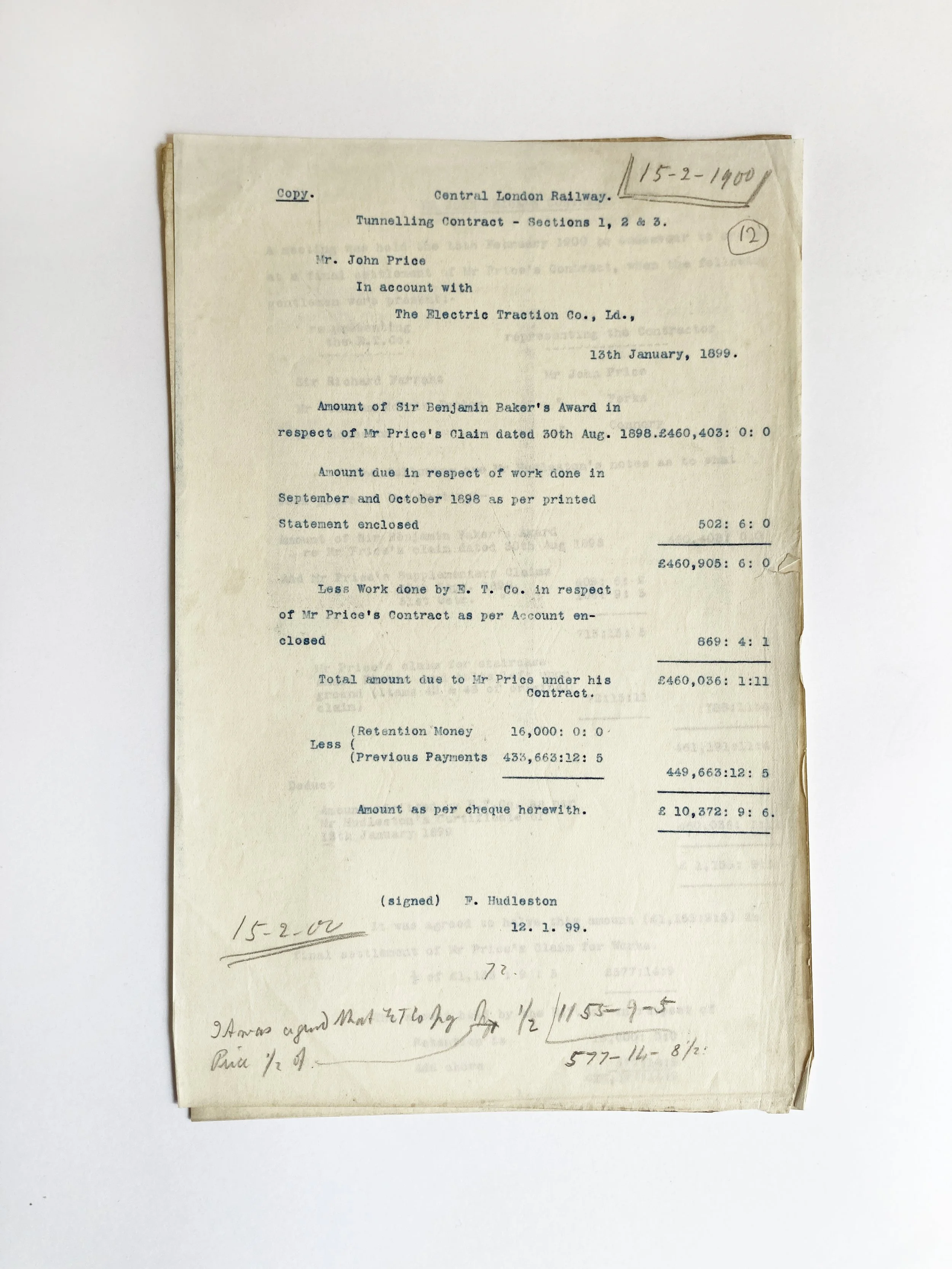
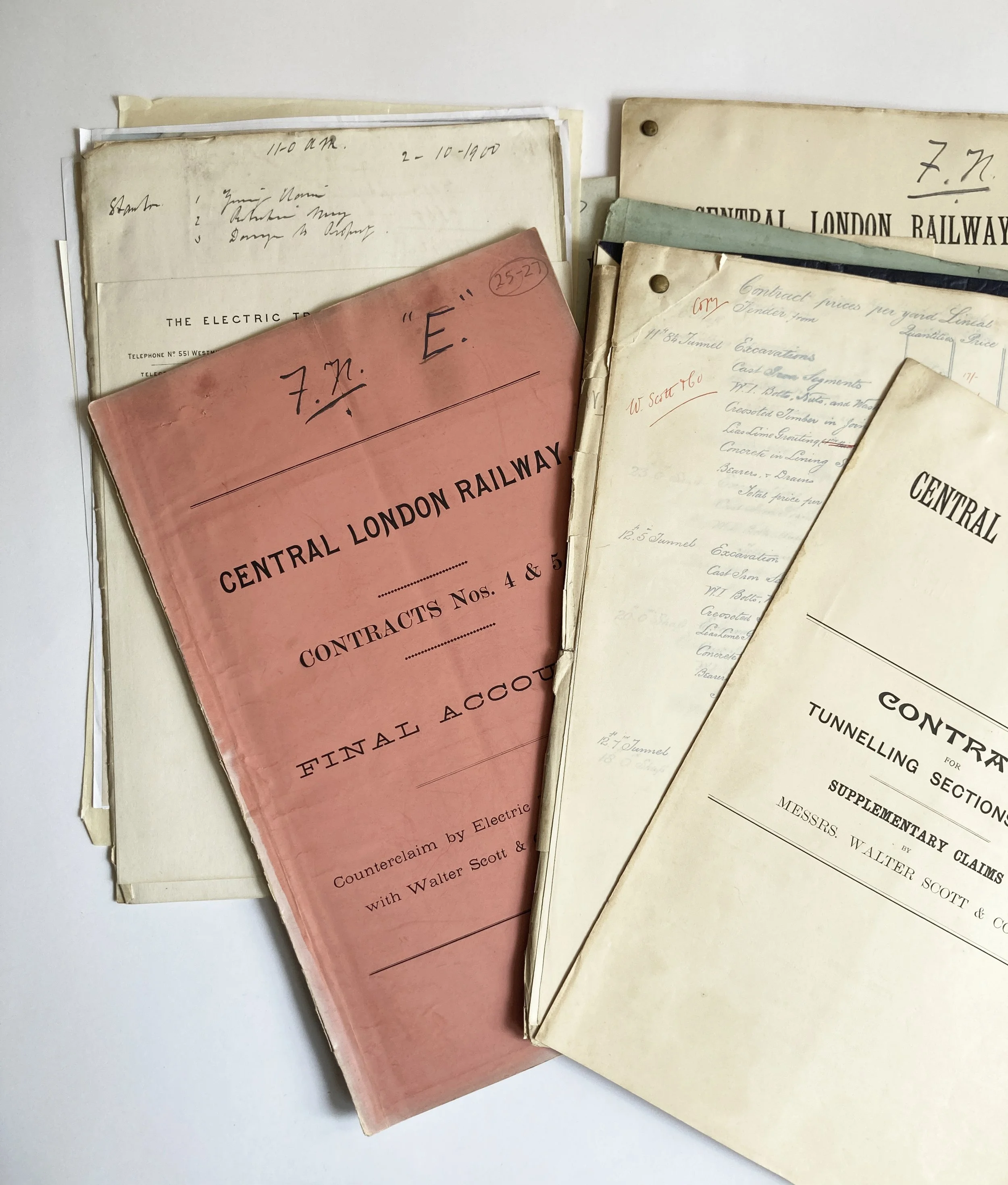
Physical description: 62 separate items, amounting to more than 500pp., in typescript, manuscript and print. The whole contained in an archival box measuring 432 × 330 × 152 (together).
An incredibly detailed and revealing archive: the working papers of Ferdinand Huddleston, managing engineer to the Electric Traction Co., documenting the construction contracts for the Central London Railway, which opened in 1900 as the ‘Twopenny Tube’. This was just the second deep level (‘Tube’) line, after the City and South London Railway, and was a vital part of the expanding Tube network in the early part of the twentieth century.
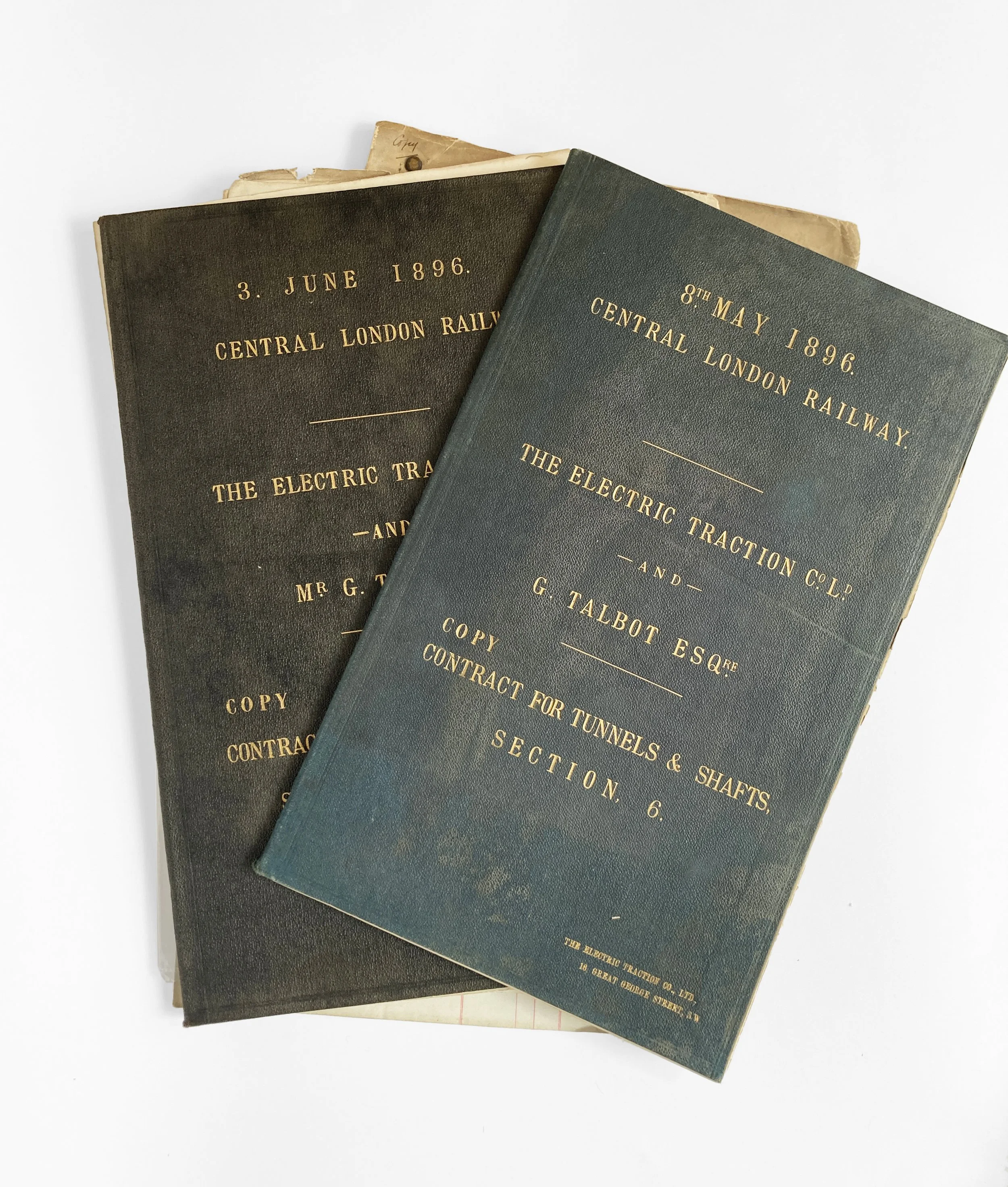
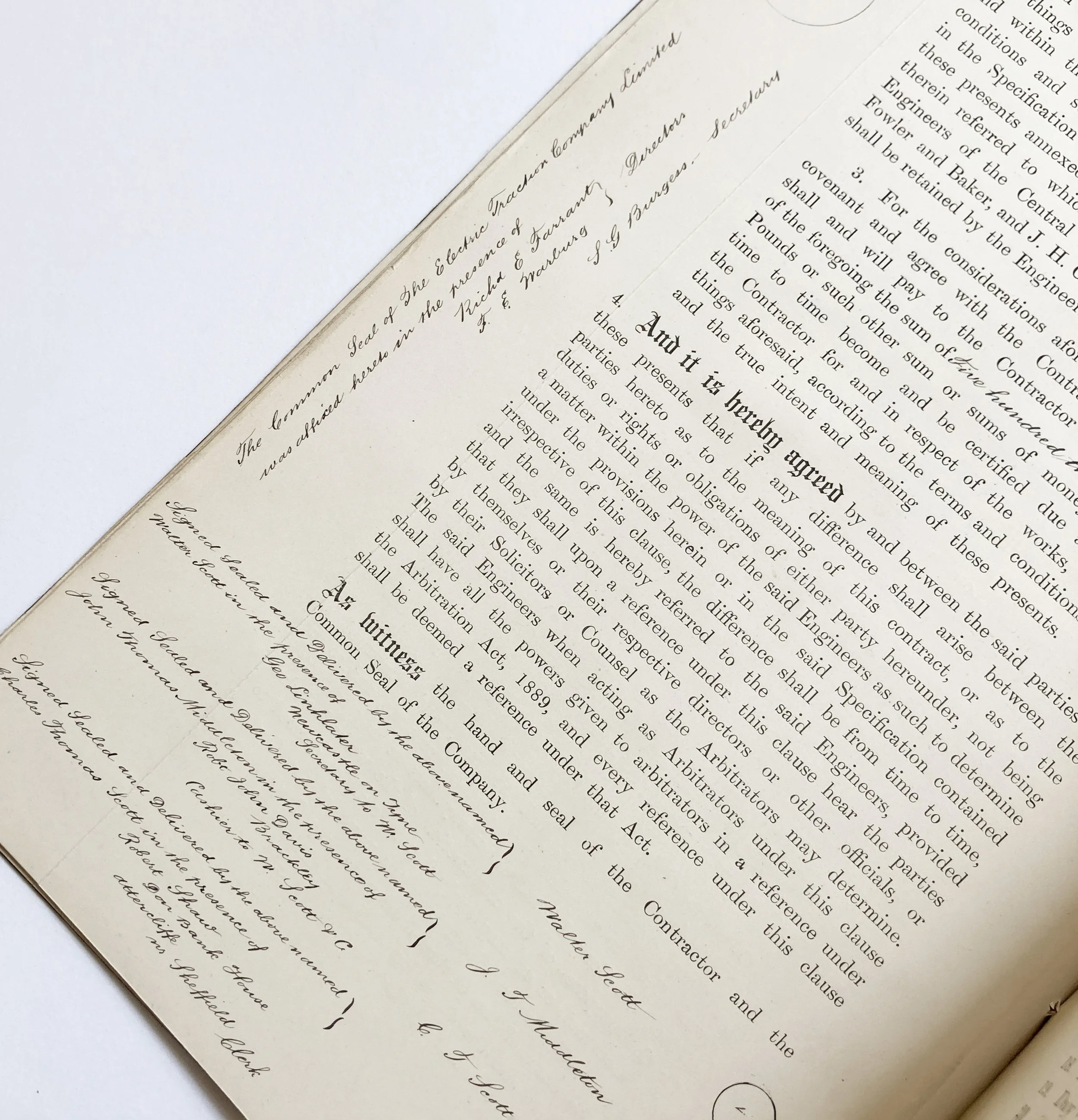
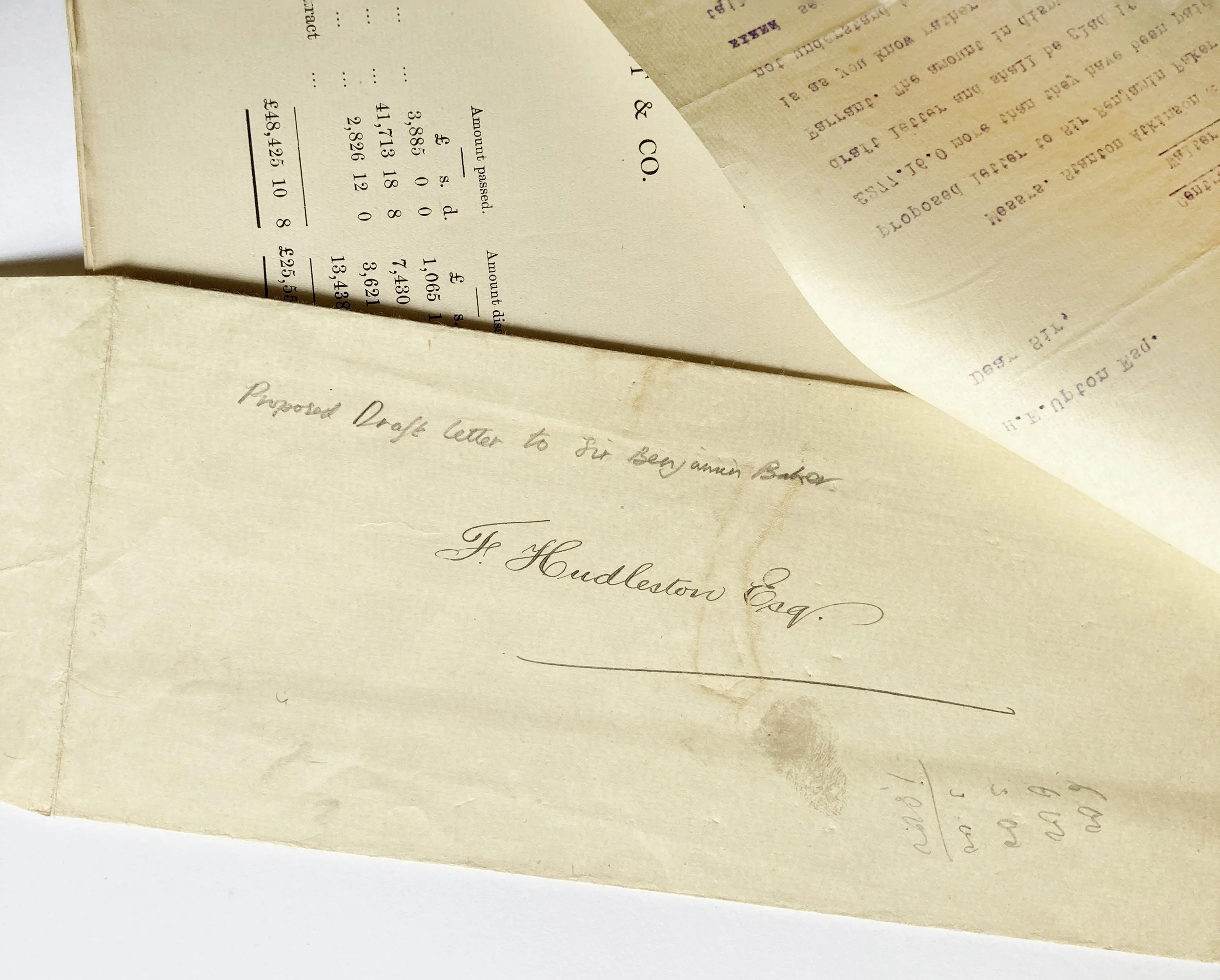
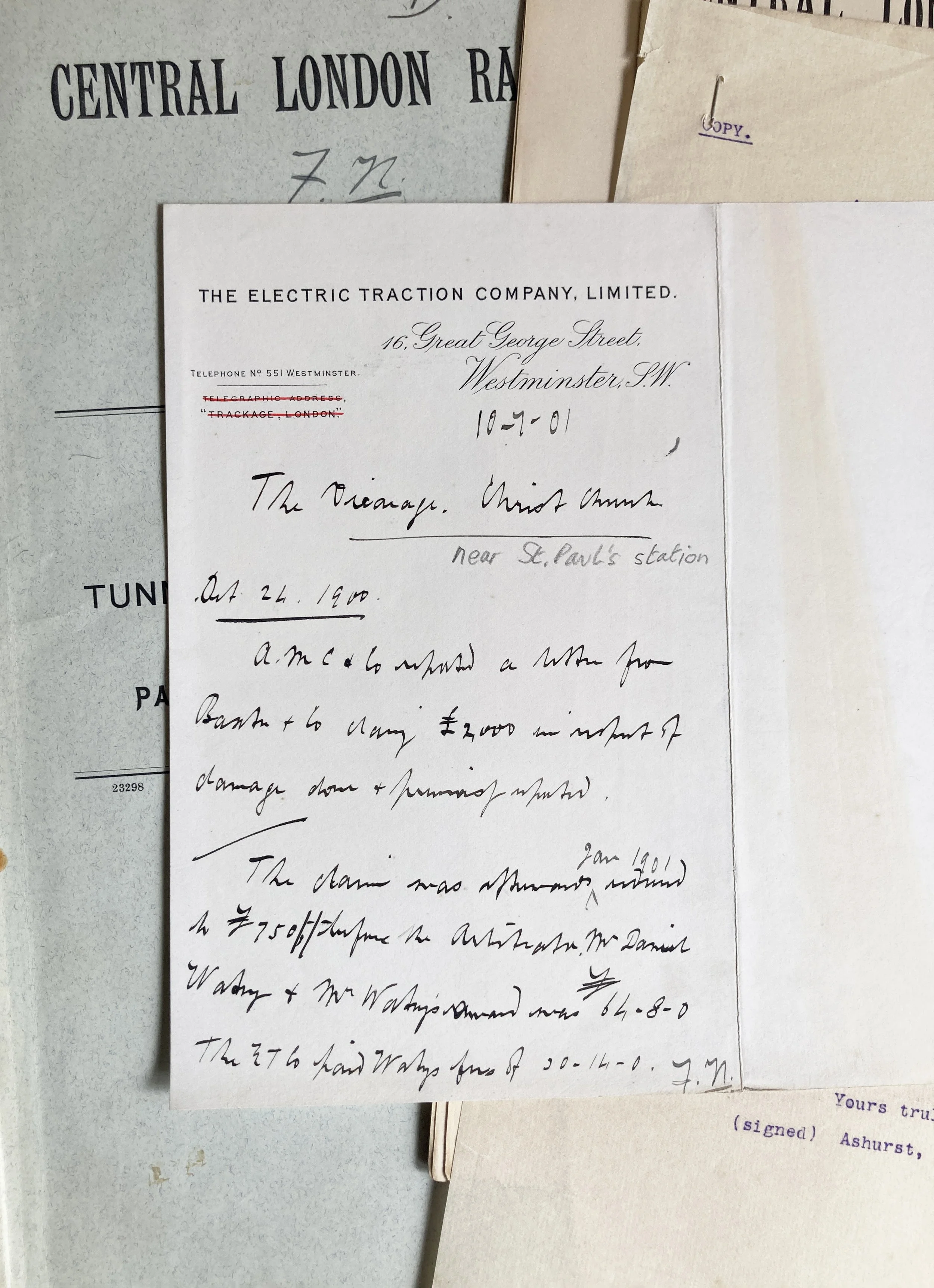
Comprising the priced construction contracts, specifications, correspondence and arbitration papers for all three tunnelling sub-contracts (Shepherd's Bush to Bank), the archive includes the original leather-bound contract volumes signed by the contractors, correspondence with Sir Benjamin Baker (of Forth Bridge fame) acting as arbitrator, and material relating to the pioneering tunnelling equipment (the ‘Price Rotary Excavator’) developed on this very contract by John Price – technology that went on to drive the Rotherhithe Tunnel and tube lines across London.
The provenance of the collection is highly significant: the papers themselves are those of Ferdnand Huddleston of Hutton John (1857–1951), a JP, civil engineer, antiquary and landowner, born at Bath, 7 November 1857. Huddleston “studied civil engineering in Liverpool, then established himself in practice in London, where chief work among his many undertakings was the Central London Underground Railway, came up to live at Hutton John on death of his brother in 1912 and took active part in county affairs”. (cumbrianlives.co.uk) The subsequent provenance is the historian of Civil Engineering Roland Paxton (1932–2025), whose carefully compiled summary of the archive is included.
Highlights of the collection include:
Item 1: the founding contract with John Price, 24 April 1896 (£420,008)
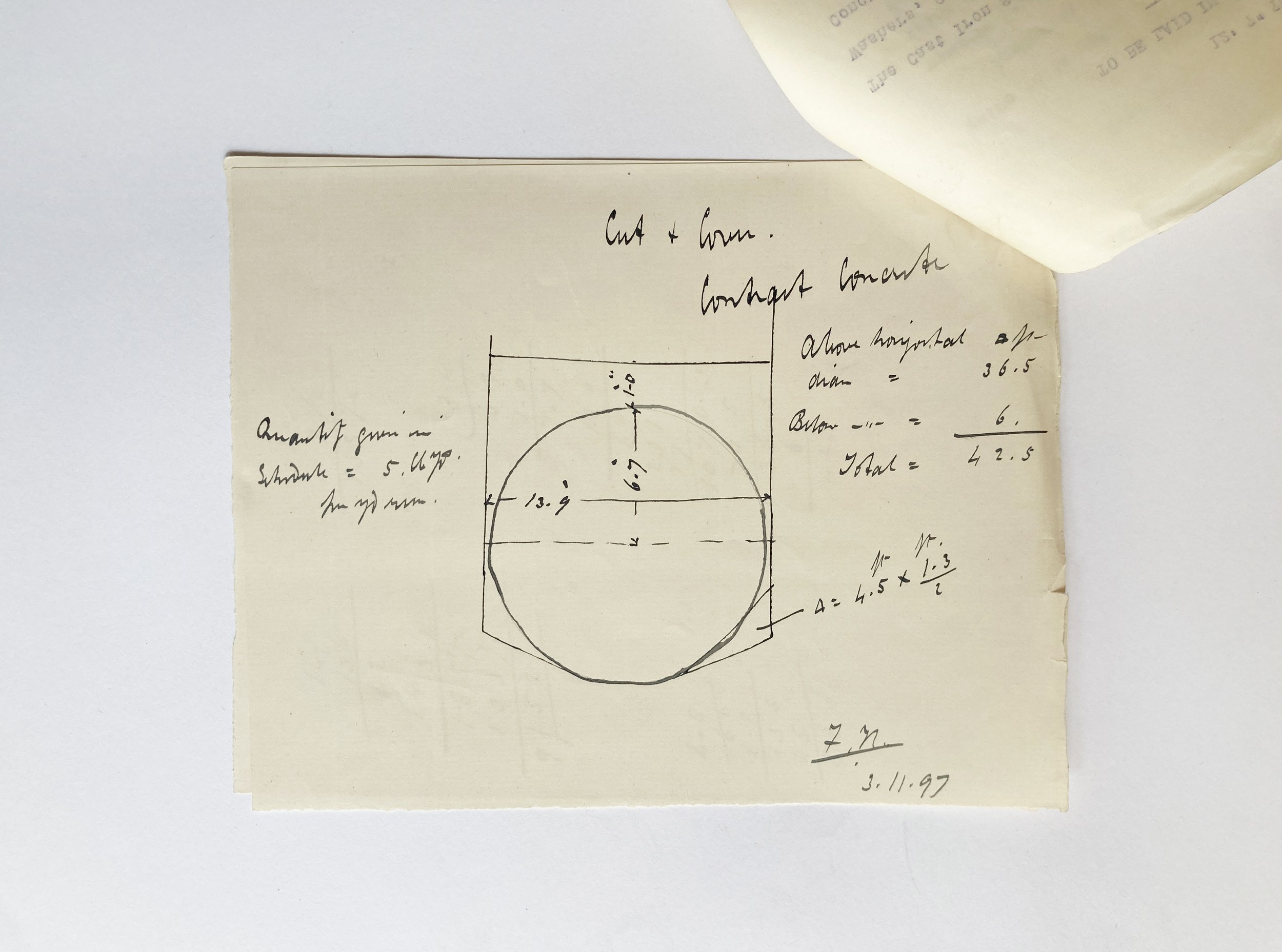
The priced contract, specification and bill of quantities between the Electric Traction Co. and John Price for Sections 1–3, Shepherd's Bush to Marble Arch. It sets out the plan of the whole railway: twin cast-iron-lined tunnels of 11ft 8¼in diameter, enlarged station tunnels, cross-over tunnels up to 25ft, and the compressed-air shield working required in London Clay.
Item 17: Basil Mott's letter of 3 April 1897 on tunnel lining and grout holes
A short but consequential technical instruction from Mott (who had just succeeded James Greathead as the Central London Railway's own engineer after Greathead's death) to Huddleston, rejecting Price's proposal to use the shield skin as part of the permanent cast-iron lining, and insisting two grout holes be retained in each iron segment "for purposes of inspection." An important document by an engineer who went on to design much of London's deep-tube network.
Items 33–35: Sir Benjamin Baker's arbitration awards
Baker (co-designer of the Forth Bridge) was brought in as independent arbitrator to settle massive contract disputes between the Electric Traction Co. and Walter Scott & Co. His award of 18 October 1900 (item 33) found in the contractor's favour to the tune of £8,260 beyond the company's figures, on top of a headline claim exceeding £536,000.
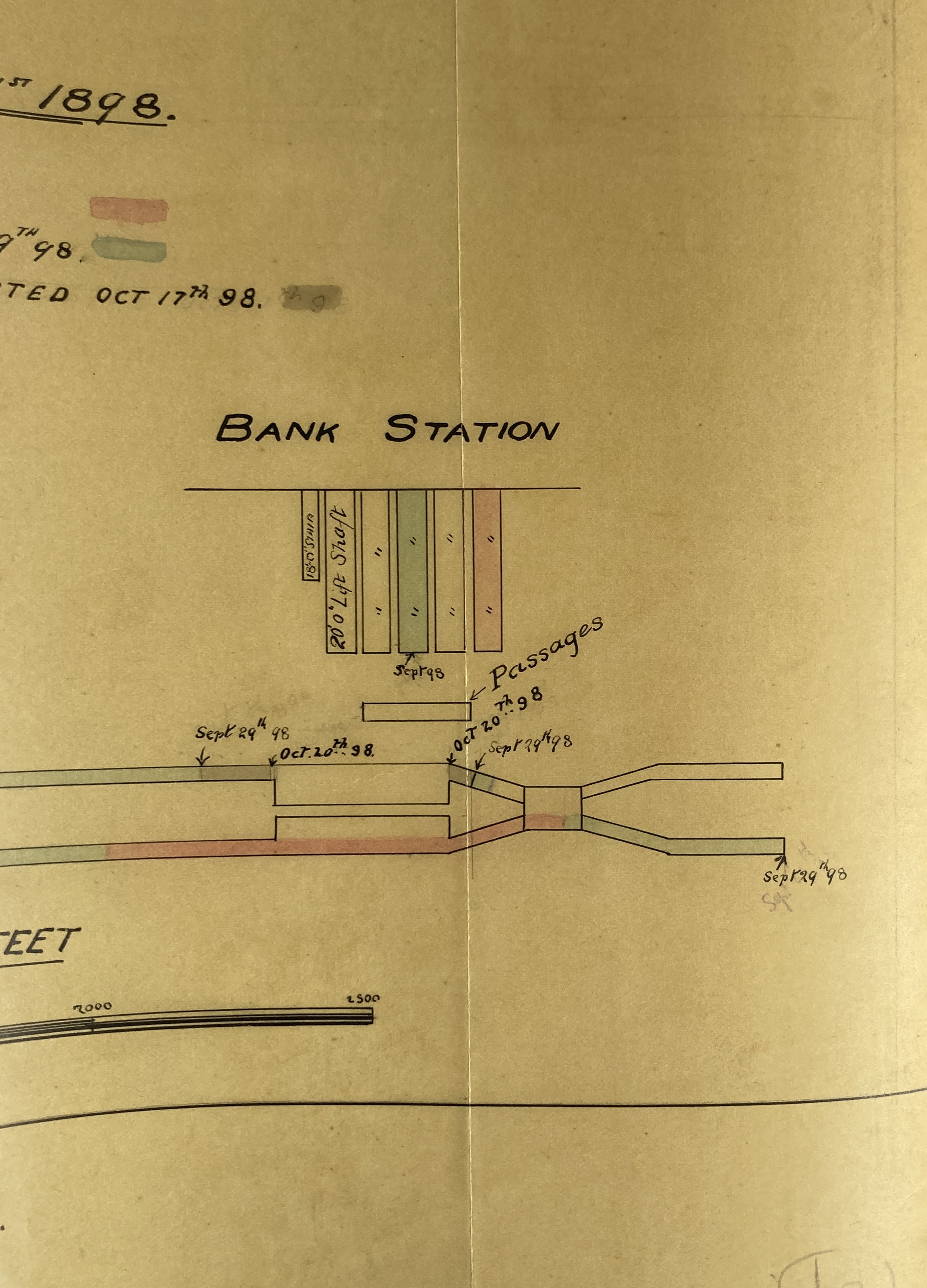
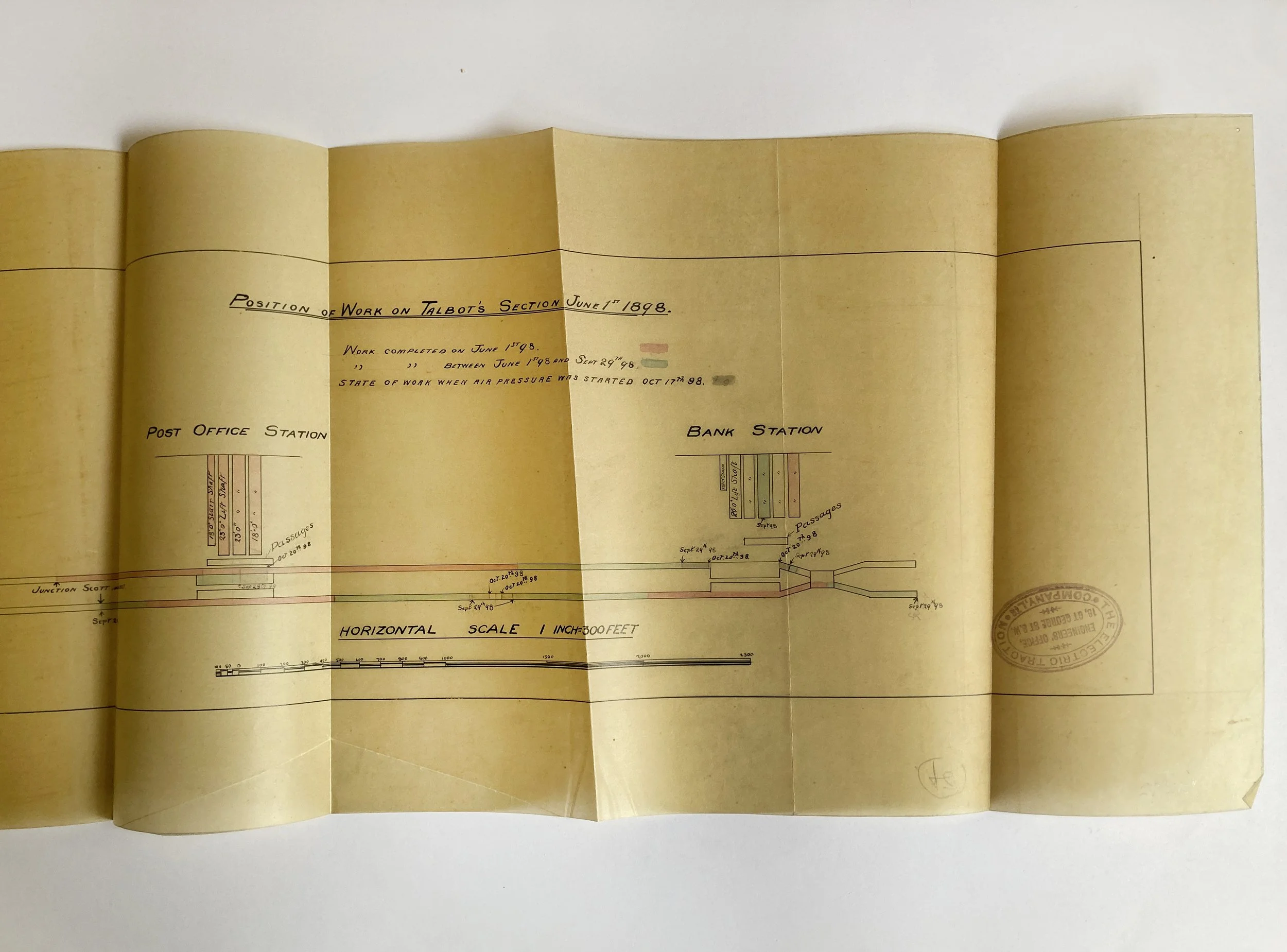
Items 49–50: George Talbot's account of the Bank Station contract
Talbot's own remarks (via Spence, December 1900) describe the obstacles at Bank/Central Station – pipes, gas mains, water mains, electric cables and old sewers running through the ground in every direction, forcing him to abandon open excavation for timbered support "at a very great risk in every direction." Combined with Huddleston's holograph note (item 50) on the resulting price renegotiations, this is the clearest evidence in the archive of the near-catastrophic difficulty and expense of building beneath the City of London, which nearly bankrupted the company and required a costly extension of time to 1900.
The Central London Railway was initially operated by electric locomotives; it was converted to multiple-unit working in 1902–03, helping establish the operating model of the modern tube railway. Its remarkable popularity, alongside developments in finance and railway consolidation, contributed to the rapid expansion of London’s deep-level tube network in the early twentieth century.
Condition: generally very good; some mottling to the leather covers of the bound contracts; paper-covered contracts sometimes with weak spines; paper edges occasionally frayed. But most documents in very good condition and no significant conservation issues at all.